Tree Removal & Felling
Walsall & West Midlands
100% Satisfaction Guaranteed across Walsall, Wolverhampton,
Sutton Coldfield, Aldridge, Cannock & West Midlands

Can’t Arrange a Site Visit?
We offer quote-by-email for customers who cannot arrange a traditional visit. Send us a photo and a brief description of the work you need, and we will provide an indicative price. Email office@aandjtreeservices.co.uk or call us.
Professional tree removal services at better prices
Professional Tree Removal Services
Sometimes a tree has to go. Whether it is dead and dangerous, diseased beyond recovery, storm-damaged, obstructing a building project, or simply in the wrong place, A and J Tree Services provides safe, professional tree removal across Walsall, Wolverhampton, Dudley, Cannock, Willenhall, and the wider West Midlands.
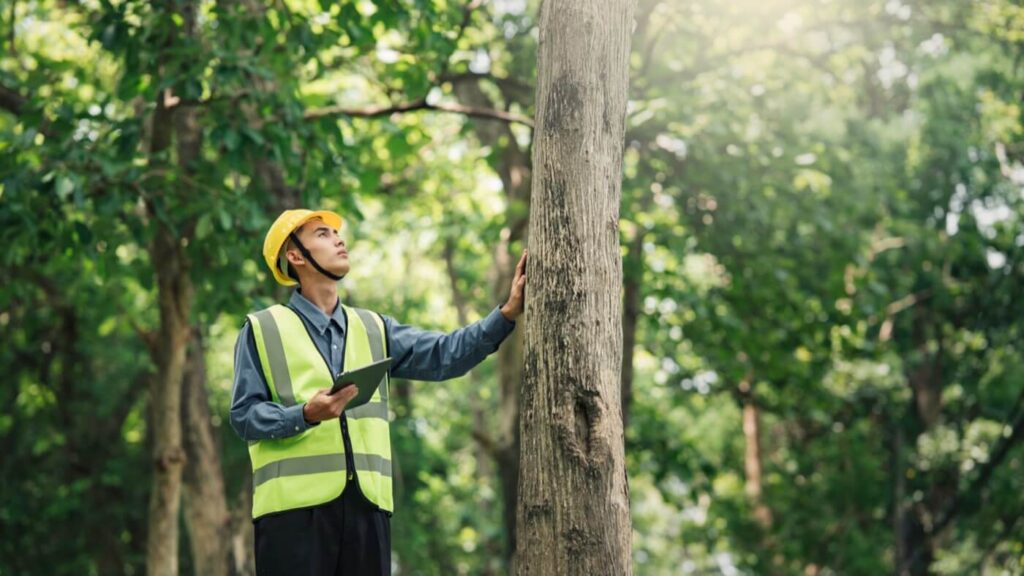
Every tree removal we carry out begins with a thorough assessment of the tree, its surroundings, and the safest method of removal. We check for Tree Preservation Orders, assess access for equipment, identify any risks such as power lines or nearby structures, and plan the operation in detail before any cutting begins.
Tree Felling in Walsall & the West Midlands
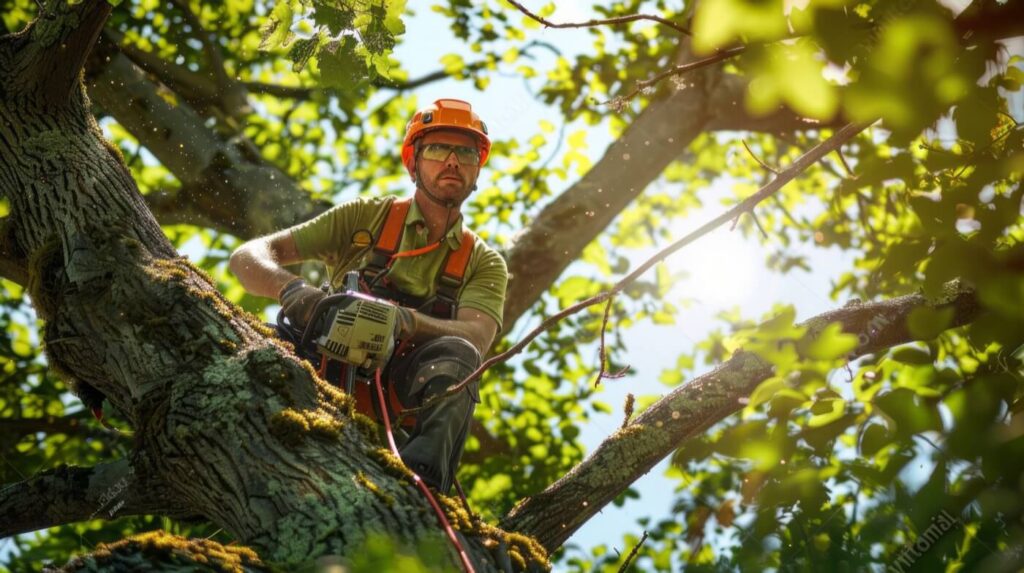
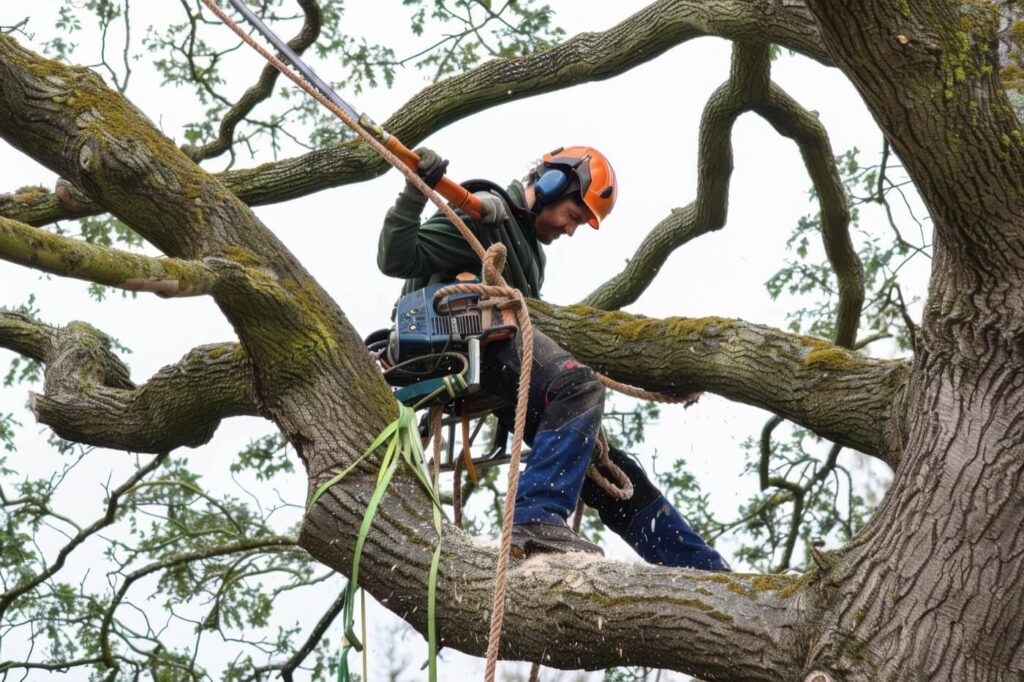
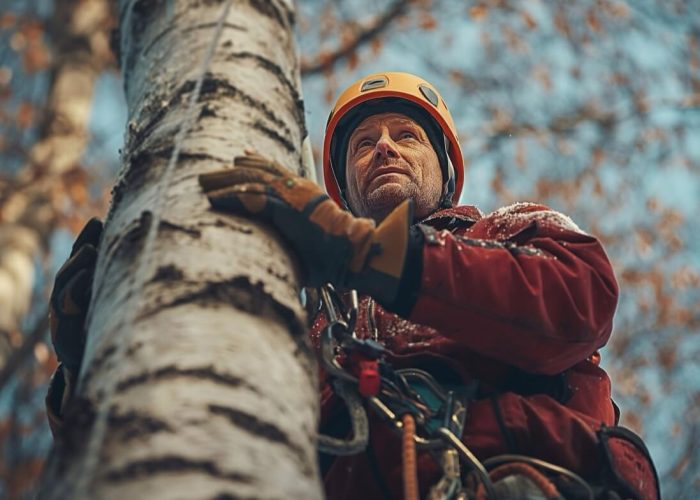
We use two primary methods depending on the site conditions. Straight felling is used where there is sufficient clear space for the tree to fall safely — common on development sites and open land. For most residential properties, we use sectional dismantling: a climbing arborist removes the tree piece by piece from the top down, lowering each section on ropes to avoid damage to gardens, fences, and buildings.
For very large or structurally compromised trees, we can arrange crane-assisted removal, which allows us to lift sections away safely without the need for the arborist to climb a dangerous tree.
Professional Tree Removal and Felling Services: What Every Property Owner Needs to Know
Professional Tree Removal and Felling Services: What Every Property Owner Needs to Know
Tree removal is one of the most significant decisions a property owner can face. Unlike pruning or trimming, which can be reversed over time as the tree regrows, felling a tree is permanent. It requires careful planning, specialist equipment, and the expertise of a qualified tree surgeon to ensure the job is completed safely, legally, and with minimal disruption to the surrounding landscape. A and J Tree Services provides professional tree removal across Walsall, Wolverhampton, Dudley, Cannock, Willenhall, and the wider West Midlands, and we understand that every removal job comes with its own unique set of challenges and considerations.
There are many reasons why a tree may need to be removed. The most common is that the tree has died or is in such a state of decline that it poses a safety risk. Dead trees lose their structural integrity surprisingly quickly — the wood becomes brittle, branches snap without warning, and the root plate can deteriorate to the point where the entire tree is at risk of falling. A tree that was perfectly healthy five years ago can become genuinely dangerous following disease, drought stress, or root damage from nearby construction work. In the West Midlands, where residential properties often have mature trees in relatively small gardens, a dead or dying tree can pose a direct threat to the house, the garden, the neighbours’ property, and anyone walking past.
Disease is another major driver of tree removal work in the UK. Ash dieback continues to affect millions of ash trees across the country, and many of the ash trees in Walsall, Wolverhampton, and Staffordshire are now showing advanced symptoms that make removal the only safe option. Oak decline, honey fungus, and various bacterial canker infections can all reach a point where treatment is no longer viable and the tree must come down. A professional arborist will always explore whether the tree can be saved through pruning, treatment, or management before recommending removal, but when a tree is structurally compromised by disease, removal is the responsible course of action.
Planning and development are increasingly common reasons for tree removal in the West Midlands. Whether it is a homeowner extending their property, a developer building new homes, or a business expanding its premises, trees that stand in the way of construction often need to be removed. This is an area where professional advice is essential, because many trees are protected by Tree Preservation Orders or are located within conservation areas where automatic protections apply. Removing a protected tree without consent is a criminal offence that can carry an unlimited fine. A and J Tree Services can advise on whether your tree is protected, assist with the application process if consent is needed, and carry out the removal work once approval has been granted.
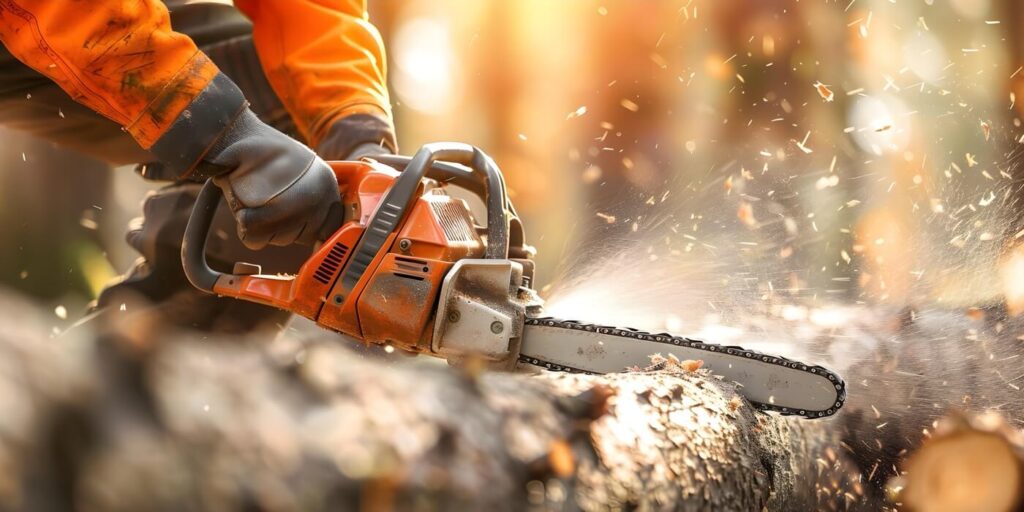
The method used to remove a tree depends on several factors: the size and species of the tree, its location relative to buildings and other structures, the access available for machinery, and the condition of the tree itself. The two primary methods are straight felling and sectional dismantling. Straight felling is the most efficient approach and involves cutting the tree at the base so that it falls in a controlled direction. This method requires sufficient clear space for the tree to land safely, so it is typically only suitable for trees in open areas such as fields, large gardens, or development sites with adequate clearance. The arborist makes precise cuts — a directional notch and a felling cut — to control exactly where the tree falls, and the area is secured to ensure no one is at risk during the operation.
Sectional dismantling is the method used when a tree cannot be felled in one piece, which is the case for the majority of tree removals in residential areas. This technique involves a climbing arborist ascending the tree using ropes and harnesses, then removing the tree piece by piece from the top down. Each section is carefully cut and either lowered on ropes to the ground or allowed to fall into a clear drop zone. Sectional dismantling requires a high level of skill and experience, particularly when working close to buildings, fences, greenhouses, power lines, or neighbouring properties. “Most of our removal work in Walsall and Wolverhampton is sectional dismantling,” explains Andrew Jones, owner of A and J Tree Services. “Gardens around here are not big enough to fell a mature tree in one go. You have to take it apart piece by piece, and that is where the real skill comes in.”
Crane-assisted removal is a third option that is used for particularly large or difficult trees, or where access for climbing is compromised — for example, if the tree is dead and too dangerous to climb. A crane is used to lift sections of the tree away as the arborist cuts them free, giving precise control over where each piece goes. This method is faster than rope-based sectional dismantling for very large trees and reduces the risk to the climbing arborist, but it does require access for the crane, which is not always available in tight residential settings.
One question we are frequently asked is what happens to the wood and waste after a tree has been removed. A and J Tree Services operates a thorough cleanup policy on every job. All branches and foliage are chipped on site using a professional woodchipper, and the chippings are removed from the property unless the customer would like to keep them for mulch. The trunk sections are either removed for processing into firewood or left with the customer if they have a wood burner and would like to season and use the timber. We leave the site clean and tidy, with no trace of debris. The only thing left behind is the stump, which can be removed separately through our stump grinding service if required.
The cost of tree removal varies considerably depending on the specifics of each job. The main factors that influence the price are the size of the tree, the method required (straight felling is less labour-intensive than sectional dismantling), the access to the site, any complications such as proximity to power lines or buildings, and whether the stump is to be removed as well. As a rough guide, removing a small tree in an accessible garden might cost a few hundred pounds, while a large tree requiring sectional dismantling in a confined space with restricted access could run into the low thousands. We always provide a free, no-obligation written quote after visiting the site, so there are no surprises.
Safety is the single most important consideration in any tree removal operation. Tree felling and dismantling account for a significant proportion of workplace fatalities and serious injuries in the UK each year, which is why the Health and Safety Executive takes a keen interest in how tree work is carried out. At A and J Tree Services, every job begins with a thorough risk assessment that considers the condition of the tree, the ground conditions, the proximity of people and property, overhead power lines, underground services, and weather conditions. “You can never be too careful with tree removal,” says Andrew. “I have been doing this for years, and I still carry out a full risk assessment on every single job. The day you get complacent is the day something goes wrong.”
All of our tree removal work is carried out to British Standard BS3998, which sets out the recommended practices for tree work in the UK. This standard covers everything from the planning and specification of work through to the techniques used for cutting and dismantling, and provides a benchmark for quality and professionalism in the industry. Working to BS3998 means that the work is carried out in a way that minimises risk, respects the biology of the tree (important for partial removals or where adjacent trees need to be protected), and meets the expectations of local authorities and insurance companies.
It is worth noting that tree removal does not always mean the complete destruction of a tree. In some cases, a tree may be reduced to a monolith — a standing trunk with the branches removed — which is then left as a habitat for wildlife. This approach is increasingly recommended by ecologists and conservation officers where the tree is in a location where its failure would not pose a risk to people or property. Dead wood habitats are incredibly valuable for biodiversity, supporting insects, fungi, bats, and nesting birds. Where possible and appropriate, A and J Tree Services will discuss habitat retention options with customers as an alternative to complete removal.
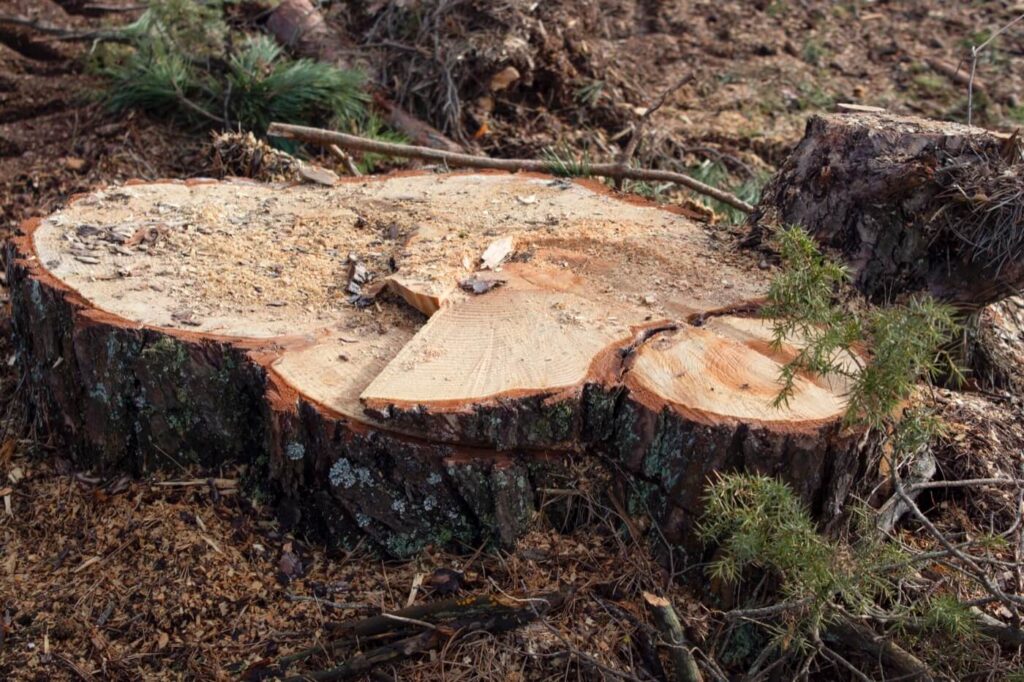
After a tree has been removed, many customers choose to have the stump ground out as well. A tree stump left in the ground will eventually decay, but this process can take many years during which the stump can be unsightly, attract fungal growth, and produce vigorous regrowth from the root system. Stump grinding uses a specialist machine to mechanically grind the stump to a depth of six to twelve inches below ground level, leaving a mixture of soil and wood chippings that can be levelled and turfed over. We offer stump grinding as an add-on to any tree removal job, or as a standalone service for stumps left behind by previous contractors.
If you have a tree on your property that you believe may need removing, the first step is to contact a qualified local tree surgeon for an assessment. A and J Tree Services provides free site visits and quotations across Walsall, Wolverhampton, Dudley, Cannock, Willenhall, Staffordshire, and the West Midlands. We will assess the tree, advise you on the best course of action, check for any legal protections, and provide you with a clear written quote. “We never push for removal if a tree can be saved through other means,” says Andrew Jones. “But when a tree does need to come down, we make sure it is done safely, professionally, and with complete respect for the customer’s property and the surrounding environment.”
What to expect
- Free site visit and written quotation
- TPO and conservation area checks
- Risk assessment and method planning
- Safe removal using the most appropriate method
- All waste chipped and removed (or timber left for the customer if wanted)
- Thorough site cleanup — you would never know we had been there
- Optional stump grinding to remove the remaining stump
Tree Removal FAQs
Do I need permission to remove a tree?
If the tree is protected by a Tree Preservation Order (TPO) or is in a conservation area, you must apply to the council before any work is carried out. We can check this for you and help with the application.
How much does tree removal cost?
Costs depend on the tree size, location, access, and method required. We provide free, no-obligation written quotes after a site visit so you know exactly what to expect.
Do you remove the stump as well?
Stump grinding is offered as an add-on to any tree removal job, or as a standalone service. We will include it in your quote if you would like the stump removed.
How long does tree removal take?
A small tree can be removed in a couple of hours. Larger trees requiring sectional dismantling typically take half a day to a full day. We will give you a time estimate with your quote.
Our Services
We're here to help! Call Us Today!
