
Crown Thinning
Walsall & West Midlands
100% Satisfaction Guaranteed across Walsall, Wolverhampton,
Sutton Coldfield, Aldridge, Cannock & West Midlands

Can’t Arrange a Site Visit?
We offer quote-by-email for customers who cannot arrange a traditional visit. Send us a photo and a brief description of the work you need, and we will provide an indicative price. Email office@aandjtreeservices.co.uk or call 01922 404537.
Expert Crown Thinning Services
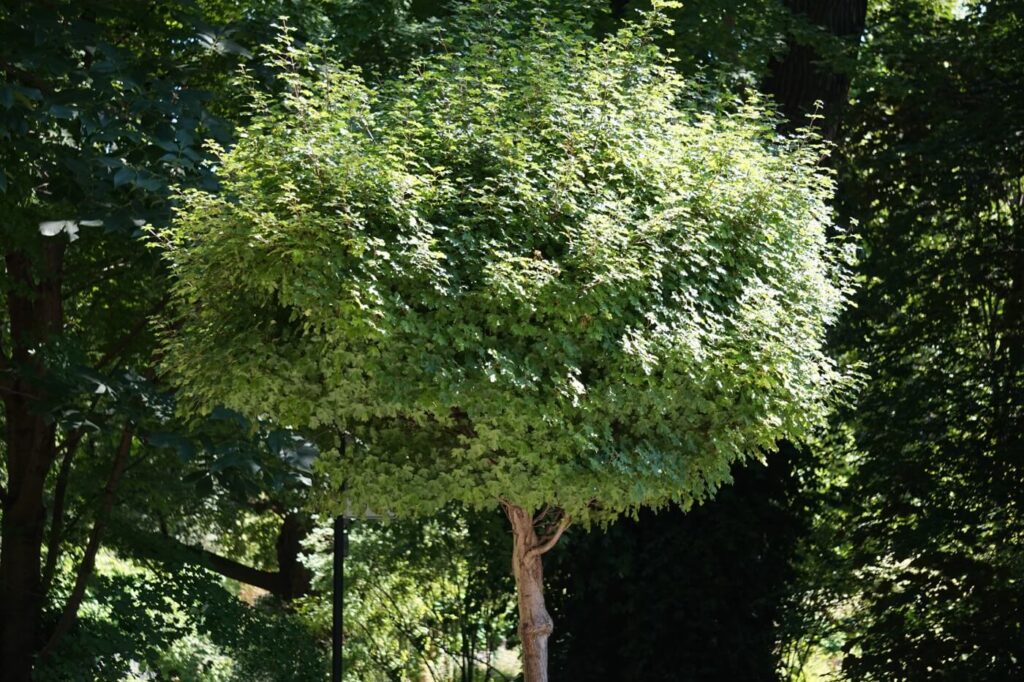
Is your tree casting too much shade? Crown thinning is the answer. Rather than reducing the size of the tree, crown thinning selectively removes branches from within the canopy to allow more light and air to pass through. The tree keeps its natural shape and height, but your garden gets the sunlight it needs.
A and J Tree Services provides professional crown thinning for residential and commercial properties across Walsall, Wolverhampton, Dudley, Cannock, Willenhall, and the wider West Midlands.
Is Crown Thinning the Right Choice?
Crown thinning is ideal when the tree is the right size but the canopy is too dense. It is particularly effective for improving light to gardens, lawns, patios, and ground-floor rooms, reducing wind resistance on exposed trees, improving air circulation to reduce fungal disease, and enhancing fruit production on mature fruit trees.
How Crown Thinning Differs from Crown Reduction
Crown reduction makes the tree smaller. Crown thinning does not change the tree’s size at all — it reduces the density. Often we recommend a combination of both for the best results.
Crown Thinning: How Selective Branch Removal Can Transform Your Garden and Improve Tree Health
Crown Thinning: How Selective Branch Removal Can Transform Your Garden and Improve Tree Health
Crown thinning is one of the most effective and least visually disruptive forms of tree surgery available, yet it remains one of the services that homeowners are least familiar with. While most people have a general understanding of what tree removal, stump grinding, or even crown reduction involves, crown thinning is often confused with other forms of pruning or dismissed as an unnecessary extra. In reality, it is one of the most valuable tools in an arborist’s repertoire, and for many trees in the residential areas of Walsall, Wolverhampton, Dudley, and the wider West Midlands, it is the single most beneficial intervention that can be carried out. A and J Tree Services has been providing professional crown thinning services across the region for years, and we consistently find that customers who opt for crown thinning are among the most satisfied with the results.
The principle behind crown thinning is straightforward. Rather than reducing the overall size of the tree — which is what crown reduction does — crown thinning involves the selective removal of a proportion of branches from within the canopy. The outer boundary of the crown remains unchanged, so the tree keeps its natural shape and height, but the interior becomes more open, allowing significantly more light and air to pass through. The effect is subtle when you look at the tree from a distance, but the impact on the garden beneath is transformative. Where previously the tree cast a dense, impenetrable shade that nothing could grow in, a thinned crown allows dappled sunlight to reach the ground, supporting grass growth, flower beds, and underplanting. The increased air circulation also benefits the tree itself, reducing the humid conditions within the canopy that favour fungal infections and promoting stronger, healthier growth.
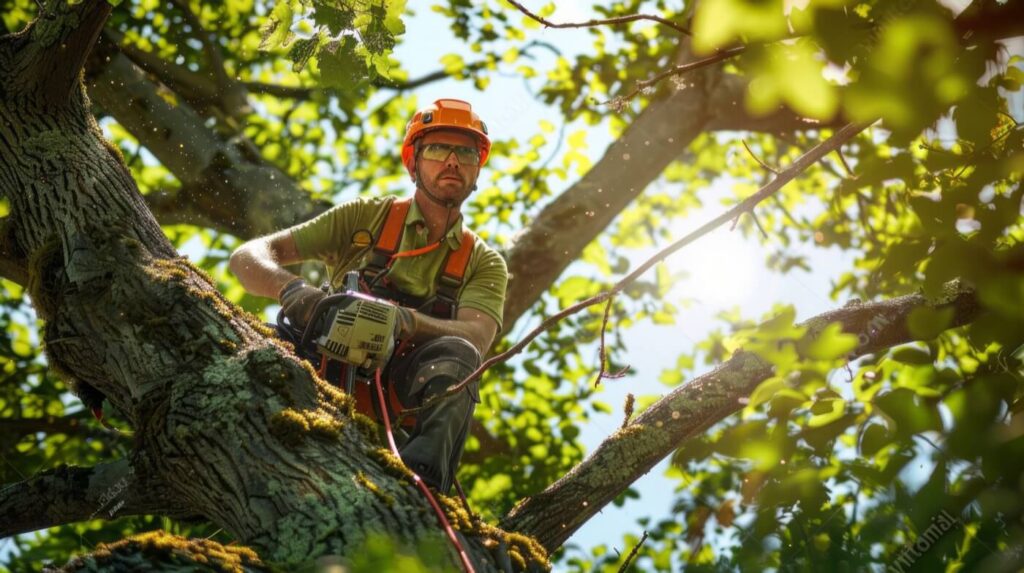
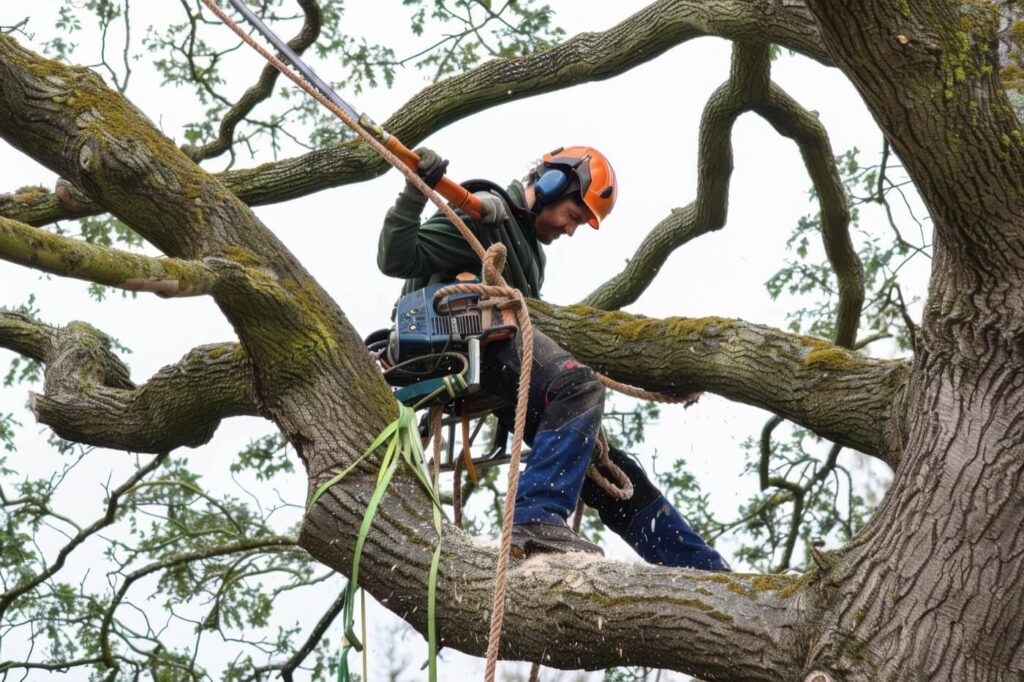
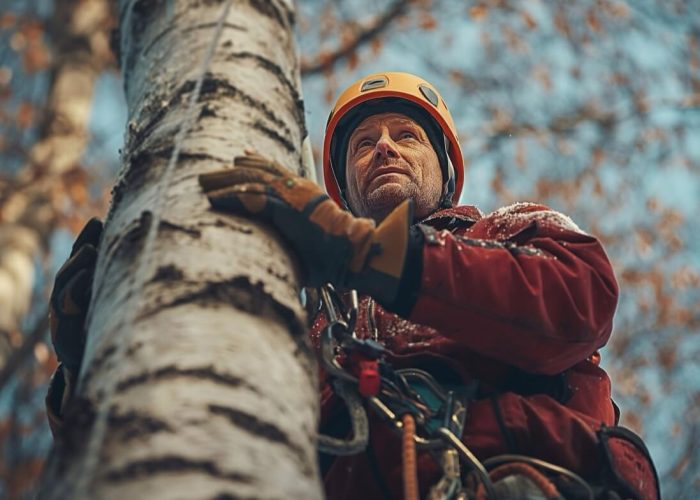
Crown thinning is carried out by a climbing arborist who works through the canopy systematically, selecting and removing individual branches according to a predetermined specification. The typical recommendation is to thin the crown by between fifteen and thirty percent, depending on the species, the density of the existing canopy, and the customer’s objectives. The arborist prioritises the removal of crossing branches (which rub against each other and create wounds), water sprouts (vigorous upright shoots that add density without structural value), and any branches that are dead, dying, or showing signs of disease. The branches that remain should be evenly distributed throughout the canopy, creating a balanced, natural appearance with no obvious gaps or patches.
The skill involved in crown thinning is in the selection of which branches to remove, and this is where the difference between a qualified arborist and an unqualified operator becomes most apparent. A poorly executed thinning job will often remove too many branches from the interior while leaving the outer shell of the canopy intact, creating what arborists call a “lion’s tail” effect — tufts of foliage at the ends of long, bare branches. This looks unnatural, exposes the remaining branches to wind loading they were not designed to bear, and can actually increase the risk of branch failure. A good crown thinning job is virtually invisible to the untrained eye — the tree simply looks lighter, airier, and more graceful than it did before.
“Crown thinning is probably the most underappreciated service we offer,” says Andrew Jones, owner of A and J Tree Services. “People ring up wanting a tree removing because it is blocking all the light to their garden, and often a crown thin is all that is needed. The tree stays, the garden gets its light back, and the customer saves hundreds of pounds compared to removal and stump grinding. But you have to know what you are doing — get it wrong and the tree ends up looking worse than before.”
One of the most common reasons customers request crown thinning in the Walsall and Wolverhampton area is to address light issues. The mature suburban gardens in these areas are often home to large deciduous trees — oaks, ashes, beeches, sycamores, and limes — that were planted decades ago when the properties were new and the trees were small. Now fully grown, these trees can cast such dense shade that the garden is virtually unusable for much of the year. Grass thins and dies, borders struggle, patios are permanently damp, and the interior rooms of the house receive little natural light. Crown thinning addresses all of these issues without changing the skyline or requiring the removal of a potentially valuable and much-loved tree.
Wind resistance is another important benefit of crown thinning, and it is one that is particularly relevant in the West Midlands where exposed sites and autumn storms can put significant stress on large trees. A dense, unpruned canopy acts like a sail in high winds, catching the full force of the wind and transferring enormous loads to the trunk and root system. This is a major factor in windthrow, where the entire tree is blown over, and in branch failure, where individual limbs snap under the wind loading. By thinning the canopy, the wind is able to pass through the crown rather than being caught by it, dramatically reducing the forces on the tree and lowering the risk of storm damage. Many insurance companies and council tree officers recommend crown thinning as a proactive management measure for large trees in exposed positions.
Crown thinning also plays an important role in the long-term health management of trees. Dense canopies create a humid microclimate that is ideal for the development of fungal infections, including various forms of leaf disease, canker, and powdery mildew. By opening up the canopy and improving air circulation, thinning creates less favourable conditions for these pathogens and promotes the overall vitality of the tree. In fruit trees — apples, pears, cherries, and plums — crown thinning can also improve fruit production by allowing more sunlight to reach the developing fruit and improving pollinator access to the blossom. Many of the older gardens in Walsall and the surrounding areas have mature fruit trees that would benefit enormously from a professional thinning job.
The relationship between crown thinning and crown reduction is often misunderstood, so it is worth clarifying how they differ and when each is appropriate. Crown reduction makes the tree smaller — it reduces the height and spread of the canopy by cutting branches back to suitable growth points. Crown thinning does not change the size of the tree at all — it reduces the density of the canopy by removing selected internal branches. In many cases, a combination of both is recommended: a modest crown reduction to bring the tree back to a manageable size, combined with a thinning to open up the canopy and improve light transmission. This combined approach gives the best of both worlds and is one of the most commonly specified treatments for large mature trees in residential settings.
Like all tree work, crown thinning on protected trees requires prior consent from the local authority. If your tree is covered by a Tree Preservation Order or is located within a conservation area, an application must be submitted to the council before any work is carried out. The application should specify the percentage of crown to be thinned and the rationale for the work, and it is typically determined within six to eight weeks. A and J Tree Services routinely handles TPO applications on behalf of our customers across the Walsall, Wolverhampton, and Dudley council areas, and we prepare detailed specifications that help the application proceed smoothly.
The cost of crown thinning varies depending on the size of the tree, the extent of thinning specified, and the access to the site. As a general rule, crown thinning is comparable in cost to crown reduction and is significantly less expensive than tree removal. For a medium-sized tree in a typical residential garden, a twenty percent thinning job can usually be completed in half a day by a two-person team. Larger trees or more extensive thinning specifications will take longer. We provide free site visits and written quotations for all crown thinning work, and we always explain in plain language what we propose to do and why.
After a crown thinning has been completed, the tree will appear more open and airy, with more visible sky through the canopy and noticeably more light reaching the ground beneath. Some customers are initially surprised by how much material has been removed, but the canopy fills in remarkably quickly during the next growing season as the remaining branches extend and new foliage develops. The results of a good crown thinning job last for three to five years before the canopy density builds back up to the point where another thinning may be beneficial. We recommend building crown thinning into a regular maintenance cycle, particularly for large trees in gardens where light and space are at a premium.
“The best crown thinning is the one you cannot see,” says Andrew. “When we finish a job and the customer says the tree looks the same but the garden is suddenly full of light, that is when we know we have done it right. It is a subtle art, and it takes experience to get the balance right between removing enough to make a difference and not removing so much that the tree looks butchered.”
All crown thinning work carried out by A and J Tree Services is performed to British Standard BS3998 and is fully insured. Our climbing arborists are NPTC certified and experienced in working with all of the common tree species found across the West Midlands. Whether you have a single oak overshadowing your patio in Walsall, a row of limes blocking light to your offices in Wolverhampton, or a mature beech dominating a care home garden in Dudley, we can provide a crown thinning solution that balances your needs with the health and long-term future of the tree.
Contact A and J Tree Services on 07930 095205 to arrange your free crown thinning consultation, or use the contact form on this page to request a callback.
How Crown Thinning Differs from Crown Reduction
Crown reduction makes the tree smaller. Crown thinning does not change the tree’s size at all — it reduces the density. Often we recommend a combination of both for the best results.
Crown Thinning FAQs
How much should a crown be thinned?
We typically recommend thinning by 15–30%, depending on the species and current density. Over-thinning can stress the tree and create an unnatural appearance.
Will it affect the shape of my tree?
No. When done correctly, crown thinning preserves the natural shape and silhouette of the tree. The canopy simply becomes more open and airy.
When is the best time for crown thinning?
Deciduous trees are best thinned during the dormant season (November to March), though the work can be done at most times of year. We will advise on the best timing for your specific tree.
Do I need permission?
If the tree has a TPO or is in a conservation area, you will need council consent. We handle this routinely and can manage the application for you.
Our Services
We're here to help! Call Us Today!