
Common Tree Diseases in the UK - Identification & Treatment Guide
A comprehensive guide to identifying and managing the most common diseases affecting British trees.

Can’t Arrange a Site Visit?
We offer quote-by-email for customers who cannot arrange a traditional visit. Send us a photo and a brief description of the work you need, and we will provide an indicative price. Email office@aandjtreeservices.co.uk or call 01922 404537.
Common Tree Diseases in the UK
Trees in the UK face an increasing number of diseases caused by fungi, bacteria, and viruses. Some – such as ash dieback – have devastated entire species across the country. Others, like apple canker and horse chestnut bleeding canker, affect individual trees and can often be managed with early intervention.
Knowing how to identify tree diseases is the first step toward protecting the trees in your garden, grounds, or woodland. This guide covers the most common tree diseases found in the UK, organised by tree species, with symptoms, causes, and practical advice on what to do if you suspect your tree is affected.
If you are concerned about a tree on your property, A and J Tree Services provides professional tree inspections and disease assessments across Walsall, Wolverhampton, Dudley, Cannock, and the wider West Midlands. Call us for advice.
Understanding and Identifying Common Tree Diseases in the UK: A Practical Guide for Property Owners
Understanding and Identifying Common Tree Diseases in the UK: A Practical Guide for Property Owners
Tree diseases are one of those subjects that most property owners never think about until the day they notice something wrong — bark that is cracking and weeping dark fluid, leaves that are dropping months too early, clusters of mushrooms sprouting from the base of a trunk, or a canopy that has thinned so dramatically that a tree which was thick with foliage last summer is now little more than a skeleton of bare branches. At that point, the questions come quickly: what is wrong with my tree, is it going to die, is it dangerous, and what can I do about it? A and J Tree Services provides professional tree inspections and disease assessments across Walsall, Wolverhampton, Dudley, Cannock, and the wider West Midlands, and one of the most valuable services we offer is helping property owners understand what is happening to their trees and what — if anything — needs to be done about it.
The Growing Threat to UK Trees
The UK tree population faces an unprecedented number of disease threats. Globalisation has accelerated the arrival of new pathogens from overseas, with infected nursery stock and contaminated timber bringing diseases to British shores that our native trees have no natural resistance to. Ash dieback, which arrived in the UK around 2012 and has now spread to every part of the country, is the most devastating recent example — it is expected to kill the majority of the country’s estimated ninety million ash trees. But ash dieback is far from the only concern. Acute oak decline is affecting native oaks across the Midlands and southern England. Horse chestnut bleeding canker has been widespread since the early two-thousands. Phytophthora diseases are attacking a range of species including beech, sweet chestnut, and larch. And long-established diseases such as honey fungus, apple canker, silver leaf, and bacterial canker continue to cause significant damage to garden, parkland, and woodland trees across the West Midlands.
Types of Tree Disease: Fungal, Bacterial and Viral
Tree diseases fall into three broad categories. Fungal diseases are by far the most common and include honey fungus, bracket fungi, canker, silver leaf, apple scab, and the various Phytophthora species. Fungi typically attack through wounds, pruning cuts, root damage, or natural openings in the bark, and many produce visible fruiting bodies — mushrooms, brackets, or crusty growths — that can aid identification. Bacterial diseases are less common but can be equally destructive. Bacterial canker, which affects cherry, plum, and other stone fruit trees, enters through leaf scars and wounds and causes gummy, sunken lesions on the bark. Horse chestnut bleeding canker is caused by the bacterium Pseudomonas syringae pv. aesculi and produces the characteristic dark, weeping patches on the trunk that give the disease its name. Fire blight, which affects apple and pear trees, is a bacterial disease that is notifiable in the UK, meaning it must be reported to the Animal and Plant Health Agency if suspected. Viral diseases in trees are rarer and less well understood, but they do occur — plum pox virus, for example, affects plum, cherry, and other Prunus species and can reduce fruit quality and tree vigour.
How Tree Diseases Spread
Understanding how diseases spread is important because it informs both prevention and management. Many fungal diseases spread through airborne spores that land on wounds or damaged bark, which is why correct pruning technique — making clean cuts at the right points — is one of the most effective ways to reduce disease risk. Honey fungus spreads underground through thick, black, bootlace-like structures called rhizomorphs, which can extend several metres through the soil from an infected stump or root system to attack neighbouring healthy trees and shrubs. Some diseases are spread by insect vectors: the bark beetles that carry Dutch elm disease, and the two-banded oak borer associated with acute oak decline, are examples. Contaminated soil, water, and even footwear and tools can spread Phytophthora species, which is why biosecurity measures — cleaning boots and equipment between sites — have become an increasingly important part of professional arboricultural practice.
Warning Signs Every Property Owner Should Know
Knowing what to look for is the first step toward protecting the trees on your property. There are several key warning signs that should prompt a closer inspection. Changes in the bark — including cracking, peeling, sunken areas, dark staining, or fluid weeping from the trunk — often indicate canker diseases or bacterial infections. Discolouration of leaves — unusual yellowing, browning, black spots, or silvery sheens — can indicate a range of fungal and bacterial diseases. Fungal fruiting bodies — including mushrooms at the tree base, bracket fungi on the trunk or branches, and small crusty or cup-shaped growths — are among the most visible signs of internal decay and should always be taken seriously, as they often indicate that the fungus has already caused significant damage to the heartwood. Thinning of the canopy — where a tree that was previously full and healthy begins to show progressively less foliage — is a general sign of decline that can be caused by root disease, vascular disease, environmental stress, or a combination of factors. Dieback — where branches die from the tips inward — is characteristic of several diseases including ash dieback and is one of the most alarming symptoms for property owners because it is so visibly dramatic.
Ash Dieback: The Most Significant Threat
Among the diseases we encounter most frequently in the West Midlands, ash dieback deserves particular attention because of its scale and the implications for property owners who have ash trees on their land. Ash is one of the most common tree species in the UK, found in gardens, hedgerows, parks, churchyards, and roadsides across the region. The disease, caused by the fungus Hymenoscyphus fraxineus, causes leaf loss, shoot dieback, bark lesions, and a progressive decline that will eventually kill most infected trees. However, the rate of decline varies enormously — some trees die within a few years, while others linger for a decade or more, becoming gradually weaker and more structurally compromised. The danger for property owners is that an ash tree in advanced decline can lose large branches or fail entirely without warning, and the structural deterioration caused by the disease makes the tree progressively less predictable. If you have ash trees near your house, garden, driveway, or any area where people walk or park, we strongly recommend having them assessed by a qualified arborist so you understand their current condition and can plan accordingly.
Honey Fungus: The Silent Garden Killer
Honey fungus is perhaps the most feared garden tree disease in the UK, and for good reason. It is caused by several species of Armillaria fungus and attacks a very wide range of trees and shrubs, killing them by destroying the root system and the base of the trunk. The telltale signs are white, fan-shaped fungal growth beneath the bark at ground level; black, bootlace-like rhizomorphs in the soil around the roots; and honey-coloured mushrooms at the base of the tree in autumn. There is no chemical treatment for honey fungus. Infected trees and stumps should be removed and the root system excavated as thoroughly as possible to slow the spread to neighbouring plants. “Honey fungus is one of the trickiest diseases we deal with,” says Andrew Jones, owner of A and J Tree Services. “By the time you see the mushrooms, the damage underground is already extensive. The best thing you can do is have dead stumps removed promptly — that is the single most effective way to reduce the risk of honey fungus establishing in your garden.”
Conifer Diseases: Common Problems Affecting Leylandii, Pine, Cypress and Yew
Conifers are among the most common trees in West Midlands gardens — Leylandii hedges alone are found on thousands of properties across Walsall, Wolverhampton, Dudley, and Cannock — yet conifer-specific diseases are often overlooked in general tree health guides. The most widespread problem we encounter is Pestalotiopsis and other fungal dieback diseases affecting Leylandii and other Cupressus species. These cause sections of the hedge or tree to turn brown and die, often starting from the inside out or from the base upward. Once a section of Leylandii has gone brown, it will not regrow, which is why early identification and treatment of the underlying cause is important. Overclipping, poor drainage, root disturbance, and drought stress can all trigger or worsen fungal dieback in conifer hedges.
Phytophthora root rot is another significant threat to conifers, particularly Lawson cypress (Chamaecyparis lawsoniana), which is highly susceptible to Phytophthora lateralis. This water-borne disease attacks the root system and lower trunk, causing the foliage to discolour from green to yellow to brown as the roots lose their ability to take up water. Affected trees often die within a season, and the disease can spread rapidly through poorly drained soil to neighbouring conifers. We see this regularly in garden settings where Lawson cypress has been planted in heavy clay soil with inadequate drainage — conditions that are common across parts of the West Midlands.
Dothistroma needle blight, also known as red band needle blight, is an increasingly serious fungal disease affecting pine trees across the UK. It causes distinctive reddish-brown bands on the needles, followed by premature needle drop that can severely weaken or kill the tree over several seasons of repeated infection. Corsican pine, lodgepole pine, and Scots pine are all susceptible, and the disease has become significantly more prevalent in recent years, likely driven by warmer, wetter conditions. For property owners with ornamental pines or pine shelter belts, needle blight is a disease worth monitoring.
Honey fungus, discussed above, is also a major killer of conifers. In fact, many conifer species — including Leylandii, Lawson cypress, and Thuja — are particularly vulnerable to Armillaria infection. The first sign is often a sudden browning and death of an entire tree or a section of a hedge, with the characteristic white fungal sheets and black rhizomorphs visible beneath the bark at ground level. “Conifers are the trees we get the most calls about for disease-related issues,” says Andrew Jones. “People plant a Leylandii hedge thinking it is indestructible, but they are actually quite vulnerable to a range of diseases, especially if they are stressed by drought, waterlogging, or heavy clipping. The key is to keep them healthy through proper maintenance, and to act quickly if you see any browning or dieback that you cannot explain.”
Yew trees, while generally among the hardiest and longest-lived of all conifers, can suffer from Phytophthora root rot in waterlogged conditions, and are occasionally affected by scale insects and fungal disorders that cause yellowing and dieback. Ancient and veteran yews — of which there are fine examples in churchyards and estates across Staffordshire and the West Midlands — deserve specialist assessment if they show signs of decline, given their irreplaceable heritage value.
When to Act and When to Monitor
The question of when to act and when to monitor is one that requires professional judgement. Not every tree disease requires immediate intervention. Many diseases are cosmetic rather than structural — apple scab and horse chestnut leaf miner, for example, are unsightly but rarely kill the tree. Others, like honey fungus and ash dieback, are progressive and ultimately fatal, but the rate of decline varies and early removal is not always the right answer if the tree can be safely retained and monitored for several more years. The critical factor is whether the disease has compromised the structural integrity of the tree to the point where it presents a safety risk. A tree with extensive internal decay in the trunk may look superficially healthy but could fail catastrophically in a storm. Conversely, a tree that looks dramatically unwell — with heavy leaf loss or discoloured foliage — may actually be structurally sound and worth retaining while it fights the infection or while a management plan is developed.
Professional Disease Assessment
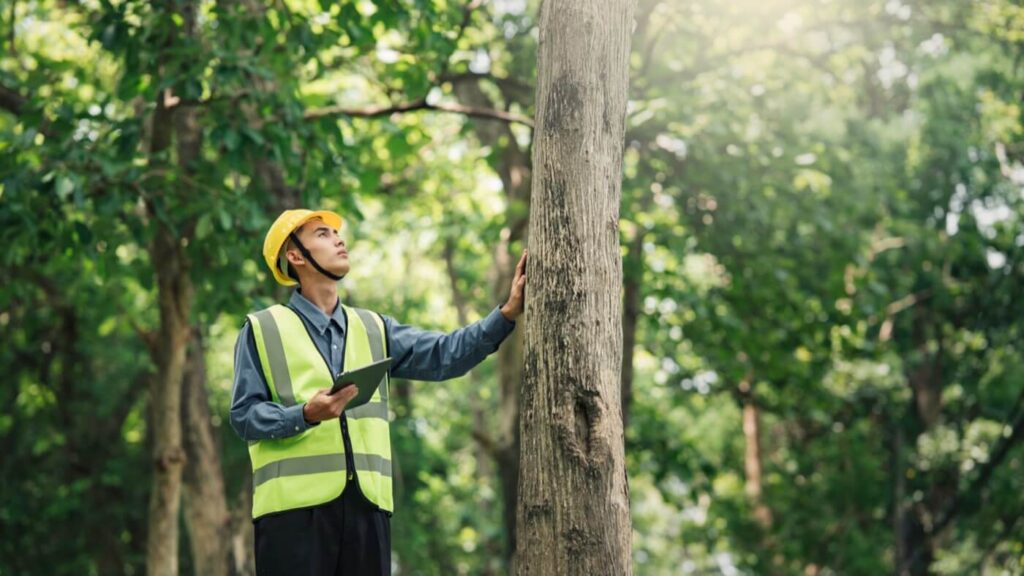
This is where professional arboricultural assessment is essential, and it is where the difference between a qualified arborist and a well-meaning internet search becomes most apparent. An experienced tree surgeon can assess not just the visible symptoms but the structural implications — using techniques such as sounding the trunk with a mallet, probing wound cavities, examining the root plate for movement or decay, and drawing on years of experience with the same diseases in similar trees. At A and J Tree Services, we carry out disease assessments as part of our tree survey service, providing clear written reports that explain what we have found, what it means for the tree’s future, and what we recommend. For trees that can be safely retained, we may recommend monitoring visits at six or twelve month intervals to track the progression of the disease. For trees that have become structurally unsafe, we will recommend removal and explain the urgency.
Protect Your Trees with Expert Assessment
For property owners across Walsall, Wolverhampton, Dudley, Cannock, Willenhall, and the wider West Midlands who are worried about a tree on their land — whether it is showing obvious signs of disease or you simply want a health check on a tree that seems less vigorous than it used to be — A and J Tree Services provides expert assessment and practical, honest advice. All our arborists are NPTC qualified, all work is carried out to British Standard BS3998, and we provide free initial consultations for homeowners concerned about tree health. Call us on 07930 095205. “The most common thing I hear is ‘I wish I had called you sooner,'” says Andrew. “Most tree diseases are much easier to manage when they are caught early. If something does not look right, get it checked — it will save you time, money, and worry in the long run.”
Apple Tree Diseases
Apple trees are among the most common garden trees in the UK, and they are susceptible to a range of fungal and bacterial diseases. Early identification and treatment can prevent the spread of infection and save the tree.
Apple Canker (Neonectria ditissima)
Apple canker is the most common disease of apple trees in the UK. It is caused by a fungus that enters through wounds, pruning cuts, and leaf scars. Look for sunken, discoloured patches of bark that crack and flake away, often forming concentric rings around the affected area. In severe cases, branches are completely girdled and die back. Infected branches should be pruned back to healthy wood, making cuts well below the visible canker. Prune in dry weather to reduce the risk of reinfection.
Apple Scab (Venturia inaequalis)
Apple scab causes dark, olive-green to brown blotches on leaves, and scabby brown patches on fruit. In wet springs, the infection can be severe enough to cause heavy leaf drop by midsummer. The fungus overwinters in fallen leaves, so clearing and composting or burning leaf litter in autumn significantly reduces the risk of reinfection the following year. Resistant cultivars are available, and fungicide treatments can be effective if applied at bud burst.
Fire Blight (Erwinia amylovora)
Fire blight is a bacterial disease that causes shoots, blossoms, and branches to wilt, turn brown or black, and look as though they have been scorched by fire. It is a notifiable disease in the UK – if you suspect fire blight, you should report it to the Animal and Plant Health Agency (APHA). Infected material should be cut back to at least 30 centimetres below the visible symptoms and destroyed. Tools must be sterilised between cuts to prevent spreading the bacteria.
Honey Fungus (Armillaria species)
Honey fungus is one of the most destructive tree diseases in UK gardens. It attacks the roots and trunk base, causing the tree to decline and eventually die. Symptoms include white fungal growth (mycelium) beneath the bark at ground level, black bootlace-like rhizomorphs in the soil around the roots, and honey-coloured mushrooms at the tree base in autumn. There is no chemical treatment. Infected trees and stumps should be removed and the root system excavated as thoroughly as possible to slow the spread.
Horse Chestnut Diseases
Bleeding Canker (Pseudomonas syringae pv. aesculi)
Bleeding canker has affected horse chestnut trees across the UK since the early 2000s and is now widespread. Look for dark, rusty-red or black bleeding patches on the trunk and main branches, often with sticky liquid oozing through cracks in the bark. As the disease progresses, the bark dies and falls away, exposing the inner wood. Severely affected trees can decline over several years and may eventually need to be removed if they become structurally unsafe.
Horse Chestnut Leaf Miner (Cameraria ohridella)
While technically a pest rather than a disease, the horse chestnut leaf miner moth is so widespread in the UK that it deserves mention here. The larvae mine into the leaves, creating brown blotches that cause leaves to shrivel and drop prematurely, often by late summer. While unsightly, the leaf miner rarely kills the tree. Clearing and disposing of fallen leaves in autumn helps reduce the population the following year, as the larvae pupate in the leaf litter.
Guignardia Leaf Blotch (Guignardia aesculi)
This fungal disease causes large, irregular reddish-brown blotches on the leaves, often with a yellow halo, from midsummer onwards. Like leaf miner, it is unsightly but rarely fatal. Good garden hygiene – clearing and composting fallen leaves – helps reduce infection levels. There is no treatment beyond cultural control.
Oak Tree Diseases
Acute Oak Decline (AOD)
Acute oak decline is a relatively recent condition affecting native oaks in England, particularly in the Midlands and southern England. Affected trees show dark fluid weeping from cracks in the bark, often with D-shaped exit holes from the two-banded oak borer beetle. The bark beneath the bleeding points is necrotic, and trees can decline rapidly over three to five years. If you notice these symptoms on an oak tree, report it to the Forestry Commission’s Tree Health Diagnostic and Advisory Service. Early identification helps track the spread of the disease.
Chronic Oak Decline
Unlike acute oak decline, chronic oak decline progresses slowly over decades. Affected trees show thinning canopies, dieback of branch tips, and a gradual loss of vigour. Multiple factors contribute, including drought stress, soil compaction, root damage from construction, and secondary infections. Management focuses on reducing additional stresses – avoiding soil compaction, improving drainage, and removing competing vegetation around the root zone.
Oak Processionary Moth (OPM)
Oak processionary moth is an invasive pest primarily found in London and southeast England, but its range is expanding. The caterpillars feed on oak leaves and form distinctive white silken nests on the trunk and branches. The caterpillars’ hairs cause serious skin rashes, eye irritation, and respiratory problems in humans. If you find OPM nests, do not touch them – report them to the Forestry Commission and have them removed by a specialist.
Plum Tree Diseases
Silver Leaf (Chondrostereum purpureum)
Silver leaf is one of the most serious diseases of plum trees. The fungus enters through pruning wounds, particularly those made in winter. Affected leaves develop a silvery sheen, and if you cut through an infected branch thicker than about two centimetres, you will see a dark brown stain in the wood. Silver leaf can kill branches and entire trees if left untreated. Always prune plum trees in summer when the risk of infection is lowest, and remove infected branches promptly, cutting well back into healthy, unstained wood.
Bacterial Canker (Pseudomonas syringae)
Bacterial canker causes sunken, gummy patches on the bark of branches and the main trunk. Infected branches may produce sticky amber-coloured ooze, and leaves can develop small brown spots known as shot-hole. Branches often die back, and young trees can be killed. Prune out infected material in summer when the bacteria is less active, and avoid pruning in wet weather. Copper-based sprays applied in autumn and winter can help reduce the spread.
Brown Rot (Monilinia species)
Brown rot causes fruit to turn brown, shrivel, and develop concentric rings of grey or buff-coloured spore pustules. The infected fruit often remains on the tree as a dried, mummified ‘mummy fruit’ through the winter, providing a source of reinfection the following year. Remove and dispose of all affected fruit, both on the tree and on the ground, and prune out any infected spurs or branches.
Cherry Tree Diseases
Bacterial Canker
Cherry trees are highly susceptible to bacterial canker (Pseudomonas syringae and P. morsprunorum). The symptoms are similar to those in plum trees: sunken, gummy bark lesions, branch dieback, and shot-hole in leaves. The disease is most active in autumn and winter when the bacteria enters through leaf scars and pruning wounds. Prune cherry trees only in summer, ideally in June or July, to minimise the risk of infection. Remove and burn infected branches.
Blossom Wilt (Monilinia laxa)
Blossom wilt causes the blossoms to turn brown and wither, and the infection can spread back into the twig, causing dieback. Affected twigs may produce small greyish tufts of spores. Prune out infected twigs and blossoms as soon as symptoms appear, cutting back to healthy wood. Good air circulation within the canopy – achieved through regular thinning – helps reduce the severity of the disease.
Silver Leaf
Cherry trees are also susceptible to silver leaf disease (see Plum Tree Diseases above for a full description). The same prevention advice applies: prune only in summer and remove infected material promptly.
Pear Tree Diseases
Fire Blight
Pear trees are particularly susceptible to fire blight (see Apple Tree Diseases above for a full description). The symptoms are the same: blackened, scorched-looking shoots and blossoms. Fire blight in pear is a notifiable disease. Cut back infected material to at least 30 centimetres below visible symptoms and report to APHA.
Pear Scab (Venturia pirina)
Very similar to apple scab, pear scab causes dark blotches on leaves and scabby patches on fruit. In severe cases, fruit may crack and become misshapen. Control measures are the same as for apple scab: clear fallen leaves in autumn, prune to improve air circulation, and consider fungicide treatment at bud burst in years following a severe infection.
Pear Rust (Gymnosporangium sabinae)
Pear rust produces striking bright orange spots on the upper surface of leaves, with corresponding raised, knobbly growths on the underside. The fungus has a complex life cycle that alternates between pear trees and junipers. If you have both in your garden, removing the juniper is the most effective long-term solution. There is no fungicide approved for home garden use against pear rust in the UK. Remove and dispose of infected leaves to reduce the spore load.
Beech Tree Diseases
Beech Bark Disease
Beech bark disease is caused by the combined attack of the beech scale insect (Cryptococcus fagisuga) and the fungus Neonectria coccinea. The scale insect damages the bark, creating entry points for the fungus, which causes areas of bark to die and fall away. Affected trees develop rough, cratered bark and may produce small red fruiting bodies. Severely affected trees can decline over several years. There is no practical treatment for large trees – management focuses on monitoring and removing dangerous trees when they become structurally compromised.
Phytophthora Root Rot
Several species of Phytophthora can attack beech trees, causing root rot that leads to canopy thinning, dieback, and eventual death. Look for dark, weeping patches at the base of the trunk and unusually thin or yellowing foliage in the canopy. Phytophthora thrives in waterlogged conditions, so improving drainage around affected trees can slow the disease. Severely affected trees should be assessed by a professional arborist, as root rot significantly increases the risk of windthrow.
Ash Tree Diseases
Ash Dieback (Hymenoscyphus fraxineus)
Ash dieback, caused by the fungus Hymenoscyphus fraxineus (formerly Chalara fraxinea), is the most significant tree disease to affect the UK in recent decades. First confirmed in the UK in 2012, it has now spread to all parts of the country. The disease causes leaf loss, crown dieback, and bark lesions, and it will eventually kill the majority of ash trees in the UK. Symptoms include dark brown or black lesions on the trunk and branches, wilting and blackening of leaves and shoots, and a characteristic diamond-shaped lesion where a dead side branch meets the trunk.
There is no treatment for ash dieback. Management focuses on monitoring affected trees for safety, removing trees that have become structurally dangerous, and retaining trees that show tolerance to the disease (approximately five to ten per cent of ash trees may prove resistant). If you have ash trees on your property, we strongly recommend a professional assessment to determine their current condition and whether they pose a safety risk.
What to Do If You Suspect a Tree Disease
If you notice unusual symptoms on a tree — discoloured bark, weeping fluid, unusual fungal growths, premature leaf drop, or dieback in the canopy — it is worth getting a professional opinion sooner rather than later. Early intervention can sometimes save the tree, and even when it cannot, identifying the problem early allows you to plan for safe removal before the tree becomes a hazard.
- Do not attempt to treat large tree diseases yourself – incorrect pruning can spread infection and make the problem worse.
- Photograph the symptoms from several angles and note when you first noticed them.
- For notifiable diseases (fire blight, oak processionary moth, Xylella), contact APHA or the Forestry Commission.
- For all other concerns, contact a qualified arborist for a professional assessment.
Concerned About a Tree? Get Expert Advice
A and J Tree Services provides professional tree inspections, disease identification, and management advice across Walsall, Wolverhampton, Dudley, Cannock, and the wider West Midlands. If you are worried about a tree on your property, call us for an assessment.
Our Services
We're here to help! Call Us Today!