

Tree Pollarding
Walsall & West Midlands
100% Satisfaction Guaranteed across Walsall, Wolverhampton,
Sutton Coldfield, Aldridge, Cannock & West Midlands

Can’t Arrange a Site Visit?
We offer quote-by-email for customers who cannot arrange a traditional visit. Send us a photo and a brief description of the work you need, and we will provide an indicative price. Email office@aandjtreeservices.co.uk or call 01922 404537.
Professional Pollarding Services
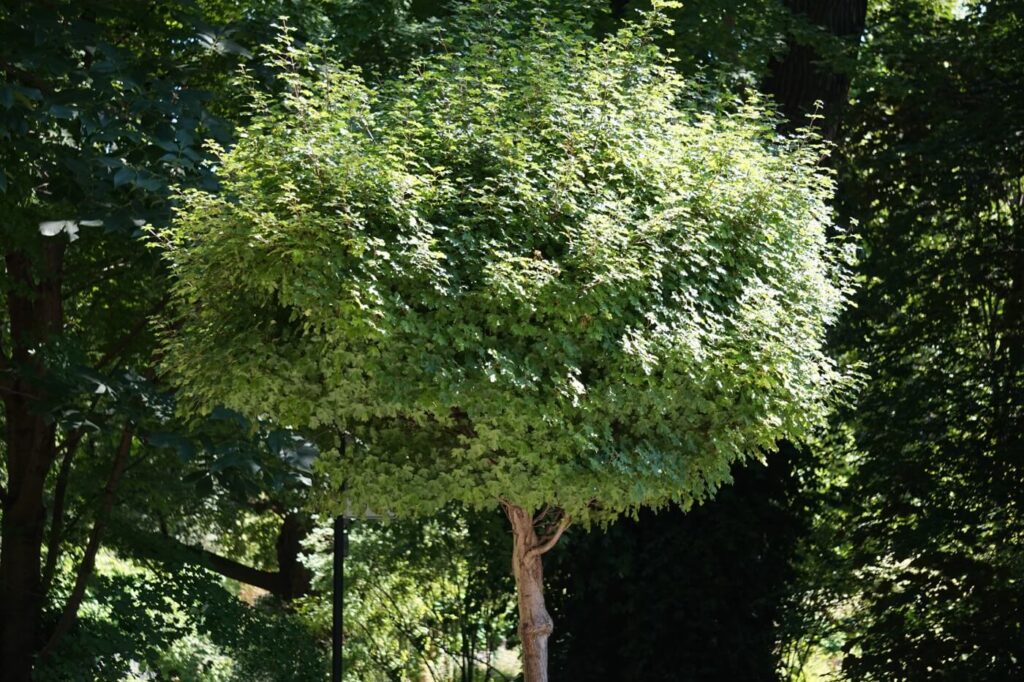
Pollarding is a traditional tree management technique where the upper branches are removed back to the main trunk or primary limbs, encouraging a dense head of new growth. It is one of the most effective ways to control the size of vigorous, fast-growing tree species while extending the tree’s productive lifespan.
A and J Tree Services provides professional pollarding across Walsall, Wolverhampton, Dudley, Cannock, Willenhall, and the wider West Midlands. We work with all commonly pollarded species including lime, willow, plane, horse chestnut, and certain species of oak and beech.
Which Trees Can Be Pollarded?
Not all trees respond well to pollarding. Species that tolerate it well include willow, lime (linden), London plane, sweet chestnut, oak (some species), and elder. Species that should not be pollarded include most conifers, beech, birch, and cherry, as they may not recover from such aggressive pruning. We always advise on whether pollarding is appropriate for your specific tree.
Pollarding in the West Midlands: A Complete Guide to This Traditional Tree Management Technique
Pollarding in the West Midlands: A Complete Guide to This Traditional Tree Management Technique
Pollarding is one of the oldest and most effective tree management techniques still in regular use today, yet it remains one of the most commonly misunderstood. Property owners across Walsall, Wolverhampton, Dudley, Cannock, and the wider West Midlands frequently ask us about pollarding — what it involves, which trees it is suitable for, when it should be done, and whether it is the right option for their particular situation. A and J Tree Services carries out professional pollarding across the region, and in this guide we explain everything you need to know about this traditional technique and how it can be used to manage trees on your property effectively and safely.
What Is Pollarding and How Does It Work?
Pollarding is a pruning technique in which the upper branches of a tree are removed back to the main trunk or to a framework of primary limbs, creating a compact head from which new growth emerges each season. The technique is typically initiated when a tree is young, with the first pollard cut made at a height of between two and four metres. Once pollarded, the tree produces vigorous new shoots from the cut points — called pollard heads — and these shoots are then removed on a regular cycle, typically every one to five years depending on the species and the desired outcome. The result is a tree that is kept permanently at a manageable size while retaining its root system, trunk, and overall presence in the landscape.
The History and Purpose of Pollarding
Pollarding has been practised in Britain for centuries, originally as a method of producing a regular harvest of small-diameter wood for fuel, fencing, tool handles, and animal fodder without killing the tree. The technique was particularly common in areas where trees were growing on common land and needed to be cut above the height that grazing livestock could reach — hence the elevated cutting point that distinguishes pollarding from coppicing. Today, pollarding is used primarily for amenity and management purposes rather than wood production, though the technique remains exactly the same. In urban and suburban settings, pollarding is valued because it allows large tree species to be retained in locations where they would otherwise outgrow the available space. A lime tree left unpollarded can reach thirty metres, but a pollarded lime can be maintained at five or six metres indefinitely.
Which Trees Can Be Pollarded?
Not all tree species respond well to pollarding, and attempting to pollard a species that cannot tolerate it can cause serious damage or kill the tree. The species that respond best to pollarding in the West Midlands context include lime (Tilia), London plane, willow, horse chestnut, sweet chestnut, certain species of oak, beech (when young), elder, and some ornamental species such as the Indian bean tree (Catalpa). Species that should not be pollarded include most conifers, birch, cherry, and any species that does not produce vigorous epicormic growth from dormant buds. It is also important to understand that pollarding should ideally be initiated when a tree is young and relatively small. Attempting to pollard a mature tree that has never been pollarded before — sometimes called “topping” — is a very different and far more harmful procedure that can leave large wounds the tree cannot heal, expose heartwood to decay, and create a structurally dangerous tree.
Pollarding vs Topping: A Critical Distinction
One of the most important distinctions in tree surgery is between proper pollarding and the damaging practice of topping. Topping involves cutting back a mature tree’s branches to stubs, regardless of species suitability or branch size, usually because the tree has been deemed “too big.” The result is large, open wounds that the tree cannot compartmentalise, extensive internal decay, and a flush of weakly attached regrowth that is more dangerous than the original branches. Topping is condemned by every professional arboricultural body and is a clear indicator that the operator is not qualified or competent. “We are called out regularly to assess trees that have been topped by unqualified operators,” says Andrew Jones, owner of A and J Tree Services. “The damage is often irreversible. The tree ends up more dangerous than it was before, and the owner ends up paying twice — once for the bad work and again to put it right.”
When Is Pollarding the Right Choice?
Pollarding is most commonly recommended in several situations. Where a tree is growing in a confined space and needs to be kept at a reduced size permanently — for example, a lime tree growing close to a house, or a willow near a boundary. Where a tree is growing beneath overhead power lines and needs to be maintained below a safe height. Where a tree has historically been pollarded and needs to continue on its established cycle — abandoning a pollard cycle can cause structural problems as the regrowth becomes too heavy for the pollard heads. Where a formal or architectural appearance is desired — pollarded trees create a distinctive, structured look that suits many urban streetscapes and formal gardens. And where a tree is subject to a Tree Preservation Order and removal is not permitted, but the tree needs to be managed to prevent it causing problems — pollarding can be an effective compromise that satisfies both the planning authority and the property owner.
The Pollarding Cycle and Ongoing Management
Once a tree has been pollarded, it must be maintained on a regular cycle. The frequency depends on the species, the growth rate, and the desired outcome. Fast-growing species like willow may need pollarding annually or every two years. Slower-growing species like lime or horse chestnut may be on a three to five year cycle. It is important not to allow the regrowth to become too large between cycles, as this creates heavy branches with weak attachment points that can tear away from the pollard heads, causing damage to the tree and creating a falling hazard. If you have inherited a property with previously pollarded trees that have been neglected, we can assess the trees and recommend a programme to bring them back into a manageable pollard cycle.
Pollarding and Planning Regulations
If a tree that you wish to pollard is protected by a Tree Preservation Order or is situated in a conservation area, you will need permission from your local planning authority before the work can be carried out. Pollarding is generally considered an acceptable management technique for trees that have been previously pollarded, but initiating pollarding on a tree that has not been pollarded before may be more difficult to get approved. A and J Tree Services handles the planning application process on behalf of our clients, preparing the necessary documentation and submitting applications to the relevant council — whether that is Walsall, Wolverhampton, Dudley, or Cannock Chase.
Why Choose A and J Tree Services for Pollarding?
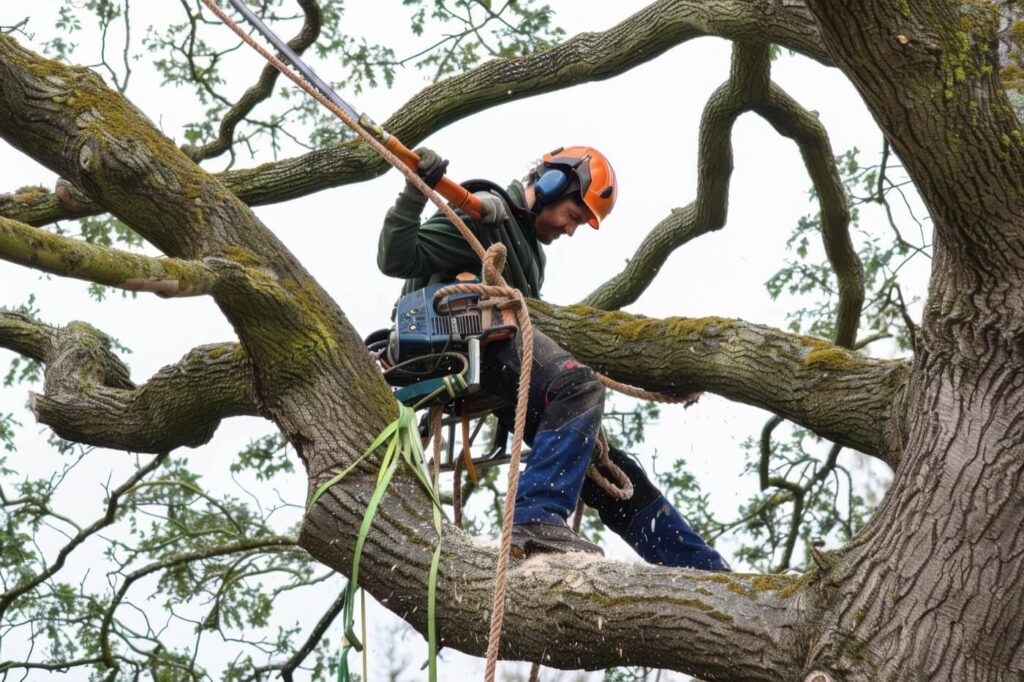
Pollarding is skilled work that requires knowledge of tree biology, species suitability, correct timing, and proper cutting technique. Cuts must be made at the right points, at the right angle, and to the right size to allow the tree to heal properly and produce healthy regrowth. Our arborists are NPTC qualified and experienced in pollarding a wide range of species across the West Midlands. All work is carried out to British Standard BS3998, and we provide clear advice on the ongoing cycle of management that your trees will need after pollarding. Call us on 07930 095205 for a free consultation. “Pollarding done properly keeps a tree healthy and manageable for decades,” says Andrew. “Done badly, it ruins the tree. It is worth getting it right.”
When to Pollard
Initial pollarding is best carried out during late winter or early spring (February to March) when the tree is dormant. Once a pollard cycle has been established, it should be maintained on a regular basis — typically every one to five years depending on the species and the desired effect. Allowing a pollarded tree to grow unchecked for many years creates heavy, poorly-attached branches that are prone to failure.
Pollarding vs Topping
Pollarding and topping may look similar, but they are fundamentally different. Pollarding is a planned management technique initiated when the tree is young or at a suitable stage, carried out at the same points each cycle to promote controlled regrowth from established pollard knuckles. Topping is the indiscriminate cutting of a mature, unpollarded tree, which causes significant stress and structural weakness. We carry out proper pollarding — we never top trees.
Tree Pollarding FAQs
How often should trees be pollarded?
Most pollarded trees need re-pollarding every one to five years. Fast-growing species like willow may need annual attention, while slower-growing species like lime can go three to five years between cycles.
Is pollarding bad for trees?
When carried out correctly on suitable species, pollarding is not harmful — in fact it can extend the tree’s lifespan significantly. However, pollarding an unsuitable species or an established unpollarded tree can cause serious damage.
Can you start pollarding a mature tree?
Starting a pollard on a mature tree that has never been pollarded carries higher risk than establishing a pollard on a young tree. We will assess your tree and advise on the best approach.
Our Services
We're here to help! Call Us Today!