
Emergency Tree Care & Storm Damage Response
Walsall & West Midlands
Rapid response for fallen trees, dangerous branches, and storm damage across Walsall, Wolverhampton, Dudley, Cannock, Willenhall, and the wider West Midlands.

Can’t Arrange a Site Visit?
We offer quote-by-email for customers who cannot arrange a traditional visit. Send us a photo and a brief description of the work you need, and we will provide an indicative price. Email office@aandjtreeservices.co.uk or call 01922 404537.
When You Need Emergency Tree Care
Storms, high winds, heavy snow, and sudden branch failure can create dangerous situations that require immediate professional attention. A fallen tree blocking your drive, a branch hanging over your roof, or a tree leaning dangerously towards a road or path cannot wait for a scheduled appointment.
A and J Tree Services provides emergency tree care for homeowners, businesses, schools, councils, and highways agencies across the West Midlands. We respond quickly, assess the situation on arrival, and carry out the necessary work to make the area safe.
Situations We Respond To
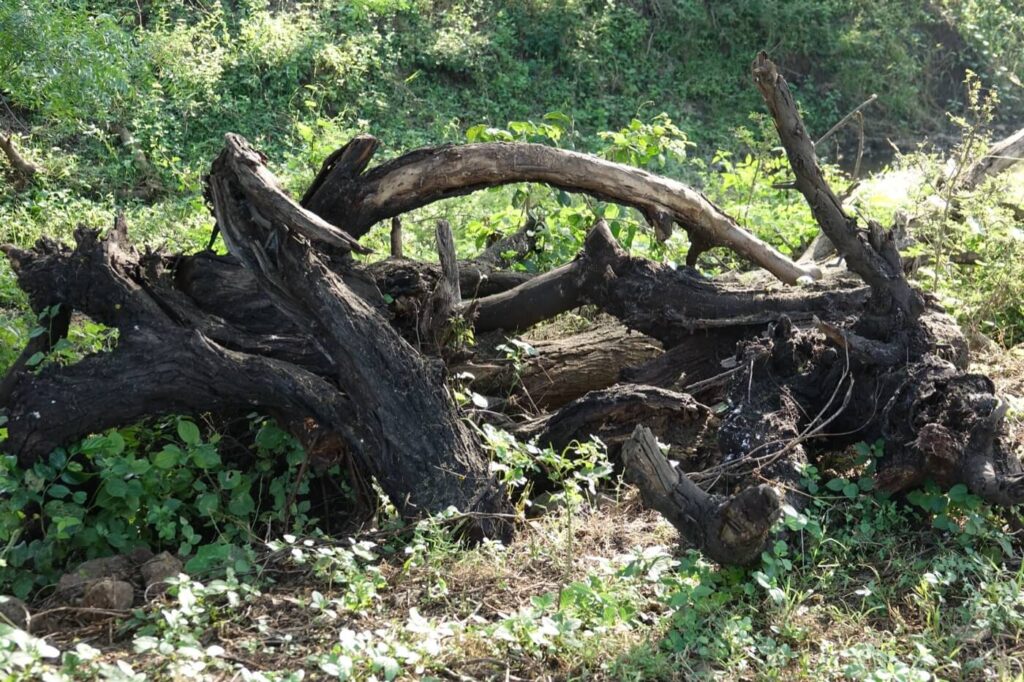
- Trees fallen across drives, roads, paths, and gardens
- Branches hanging dangerously over buildings, cars, or public areas
- Trees leaning after storm damage and at risk of falling
- Root plate failure — where the tree has partially uprooted
- Trees or branches on power lines (we liaise with the power company)
- Trees blocking emergency access routes
Emergency Tree Removal and Storm Damage Response in Walsall: 24-Hour Expert Care
Emergency Tree Removal and Storm Damage Response in Walsall: 24-Hour Expert Care
Storms, high winds, and adverse weather events don’t follow convenient schedules. A tree can fail at midnight, a major branch can come down during a storm, or a dangerous tree can threaten your home at any hour. When a tree emergency occurs in Walsall, Wolverhampton, or the West Midlands, you need rapid, professional response from an emergency tree surgeon who understands the urgency and has the expertise to handle complex, dangerous situations safely. A and J Tree Services provides 24-hour emergency tree care, understanding that tree emergencies demand immediate attention to protect lives, property, and critical infrastructure.
What Constitutes a Tree Emergency
Not every tree problem requires emergency response, but some situations absolutely do. Understanding the difference helps you respond appropriately.
Genuine Emergencies Requiring Immediate Action:
– **Fallen or fallen trees blocking roads, driveways, or pathways** – These create immediate safety hazards and often obstruct access for emergency vehicles.
– **Trees leaning precariously or partially uprooted** – These are unstable and likely to fail completely. Even if they’re not currently in contact with structures, continued instability is extremely dangerous.
– **Branches hanging dangerously over homes or occupied areas** – Particularly after storms, branches may be partially broken and suspended precariously, posing imminent falling risk.
– **Trees partially through homes or power lines** – These combine immediate physical danger with potential electrical hazard.
– **Large dead branches or trees near occupied buildings** – Especially after storms when wind loading and structural compromise are most likely.
– **Root damage exposing or threatening building foundations** – Tree roots can undermine structural integrity if not addressed urgently.
Non-Emergency Situations (though still requiring attention):
– A small dead branch in a corner of the garden with no nearby structures
– A hedge that’s overgrown but stable and not posing immediate hazard
– A tree showing signs of disease or stress but not currently dangerous
The distinction matters because emergency tree surgeons charge premium rates—and rightly so, given the complexity and risk of emergency work. A professional arborist can assess your situation and advise whether it’s genuinely urgent or can be scheduled for standard service in the coming weeks.
Why Speed Matters in Emergency Tree Situations
When a tree has failed, time matters for several reasons:
Liability and Safety: An unstable tree or fallen branch poses ongoing hazard. Every hour it remains, risk of further failure or injury increases. From a legal standpoint, removing the hazard promptly demonstrates you’re acting responsibly.
Weather Escalation: Storm damage often occurs during or immediately after adverse weather. Remaining weather can further compromise tree stability or cause secondary failures.
Access and Complications: A fallen tree blocking a road must be cleared to restore access. A tree partially over a building must be handled before it can cause additional structural damage. Delays compound the situation.
Property Protection: Water damage, structural compromise, and secondary damage to adjacent property accelerate when a tree is partially through a building or resting against it.
Insurance Claims: Documentation of rapid professional response supports insurance claims. Many policies require prompt action to minimize damages.
Assessment of Dangerous Trees After Storm Damage
When A and J Tree Services responds to an emergency tree situation, our first step is careful assessment. This isn’t about rushing into tree removal—it’s about understanding what we’re dealing with and planning the safest, most effective response.
We examine:
– **Tree structure and stability** – Is the tree likely to fail again? Are additional branches at risk?
– **Contact points and damage** – What is the tree or branch currently in contact with? What damage has already occurred?
– **Access routes** – How can we safely work around buildings, structures, utilities, and access limitations?
– **Surrounding hazards** – Are utilities involved? Are there secondary hazards from the initial failure?
– **Weather conditions** – Are conditions worsening or improving? Should we proceed immediately or can we wait for safer conditions?
– **Urgency level** – Is this truly critical right now, or can we plan more deliberately?
This assessment informs our emergency response plan. Some situations require immediate action; others might proceed more deliberately while still providing relatively rapid response within 24-48 hours.
“Emergency tree work is where experience and training really matter,” explains Andrew Jones, founder of A and J Tree Services. “We’ve handled situations ranging from trees through roofs to massive limbs blocking roads. The key is assessing what you’re dealing with, planning safely, and executing efficiently. Panic leads to mistakes—careful assessment leads to good outcomes.”
Emergency Tree Removal Process
When removal is necessary, the process depends on what we’re dealing with.
For Fallen Trees Blocking Access: If a large tree is fully down across a road or driveway, we begin by cutting the tree into manageable sections, clearing the main trunk first to restore access, then removing remaining material. A large oak or beech might require several hours and careful coordination.
For Trees Partially Over Buildings: These are particularly complex. We must stabilize the tree or branch, carefully support the structure, and remove the tree in sections without allowing it to shift suddenly onto the building. This often requires specialized equipment and rigging expertise.
For Uprooted or Leaning Trees: If a tree is partially uprooted but still has soil attachment, we might attempt to stabilize it if the client wants to preserve it. More commonly, it’s safer to remove the tree completely, extract the remaining roots, and restore the site.
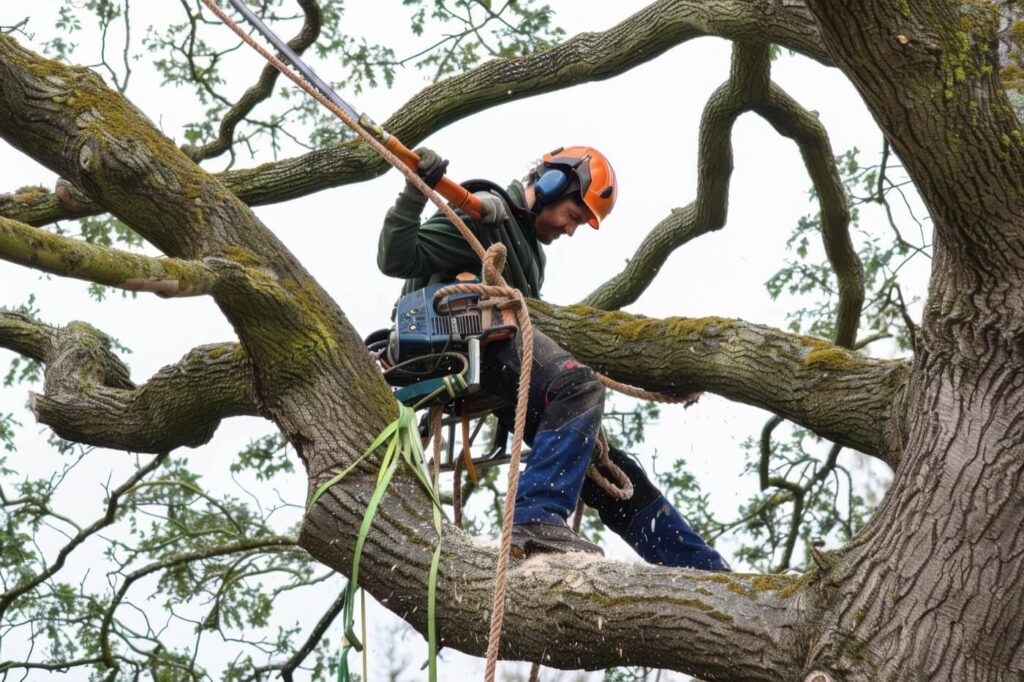
For Branches Over Structures: Dangerous branches must be removed or lowered carefully. We use rigging equipment to control descent, preventing impact on the building below.
All emergency work maintains strict safety protocols. We use proper personal protective equipment, secure the site, establish exclusion zones, and communicate clearly with property owners and emergency services if they’re involved.
Insurance and Emergency Tree Claims
Most home insurance policies cover emergency tree removal if a tree on your property damages your home, or if a tree from a neighbor’s property damages yours. However, policies typically cover removal of the failed tree or branch—not removal of trees that are merely threatening but haven’t yet damaged property.
Documentation is critical for claims. Taking photos of the damage, the tree position, and any weather conditions, and obtaining professional assessment and quotes, all support your claim. Insurance companies prefer dealing with established tree services, and our detailed quotes and professional photos support the claims process.
If you’re uncertain whether your situation qualifies for insurance coverage, contact your provider. Our quotes can help you understand costs and support your claim.
When to Call A and J Tree Services in an Emergency
Any of these situations warrant immediate contact:
– **A tree has fallen across your property or the road** – Call 07930 095205 immediately. If the road is blocked, also contact local council or traffic authority.
– **A tree is leaning dangerously or partially uprooted** – This is unstable and could fail without warning. Don’t wait—call immediately.
– **A large branch is hanging dangerously or partially broken** – Particularly after storms, these can fail suddenly with wind shifts or weight changes.
– **A tree is in contact with your roof or other structure** – The longer it remains, the more damage occurs. Urgent response is needed.
– **You’re uncertain whether something is genuinely urgent** – Call and describe the situation. We can advise whether immediate action is necessary or whether standard scheduling is appropriate.
After-Hours Emergency Contact
A and J Tree Services provides after-hours emergency contact. When you call 07930 095205 outside normal business hours, your call is directed to our emergency response service. We respond to genuine emergencies 24 hours a day, 7 days a week, understanding that storm damage doesn’t wait for business hours.
Emergency call-outs outside normal hours do incur additional charges, reflecting the costs of rapid mobilization and weekend/night work. However, the cost of not addressing a genuine emergency—property damage, injury, liability—typically far exceeds the premium for rapid response.
Prevention: Regular Inspection Reduces Emergency Risk
While we can respond rapidly to emergencies, prevention is always preferable. Regular tree inspection by a qualified arborist can identify hazardous trees or branches before they fail. Dead branches can be removed during deadwooding, structural issues can be addressed through crown reduction or crown cleaning, and declining trees can be monitored or managed before they pose emergency risk.
For properties in Walsall and the West Midlands that have experienced storms or have mature trees that concern you, professional inspection is a sound investment. Identifying and addressing problems proactively prevents emergency situations.
Serving Walsall and the West Midlands Around the Clock
A and J Tree Services serves Walsall, Wolverhampton, Dudley, Cannock, Willenhall, and throughout Staffordshire with emergency tree response. We understand that tree emergencies are stressful, costly, and potentially dangerous. Our rapid response, professional expertise, and commitment to safety mean that when you contact us about an emergency, you’re getting experienced, qualified arborists who know how to handle complex situations safely and effectively.
Don’t hesitate if you believe you have a genuine tree emergency. Contact us immediately on 07930 095205. We’re here 24 hours a day to respond when you need us.
What to Do If a Tree Falls
Keep a safe distance — a fallen tree may still shift, and hanging branches can drop without warning. Do not attempt to cut or move the tree yourself. If the tree is blocking a public road or is near power lines, call the relevant authority as well as a tree surgeon. Photograph the damage for your insurance claim. Then call us and we will be with you as quickly as possible.
Emergency Tree Care FAQs
How quickly can you respond?
We aim to respond to genuine emergencies as quickly as possible, typically within hours. Response times depend on our current workload and the severity of the situation.
Who pays for emergency tree removal?
If the tree is on your property, your home or buildings insurance will usually cover the cost of emergency removal. We can provide the documentation your insurer will need.
Do I need to call the council?
If a tree falls across a public road, contact the council or Highways England. If the tree is on your own property, you do not need to involve the council unless the tree is protected by a TPO.
Our Services
We're here to help! Call Us Today!