
Crown Reduction
Walsall & West Midlands
100% Satisfaction Guaranteed across Walsall, Wolverhampton,
Sutton Coldfield, Aldridge, Cannock & West Midlands
Can’t Arrange a Site Visit?
We offer quote-by-email for customers who cannot arrange a traditional visit. Send us a photo and a brief description of the work you need, and we will provide an indicative price. Email office@aandjtreeservices.co.uk or call 01922 404537.
Expert Crown Reduction Services
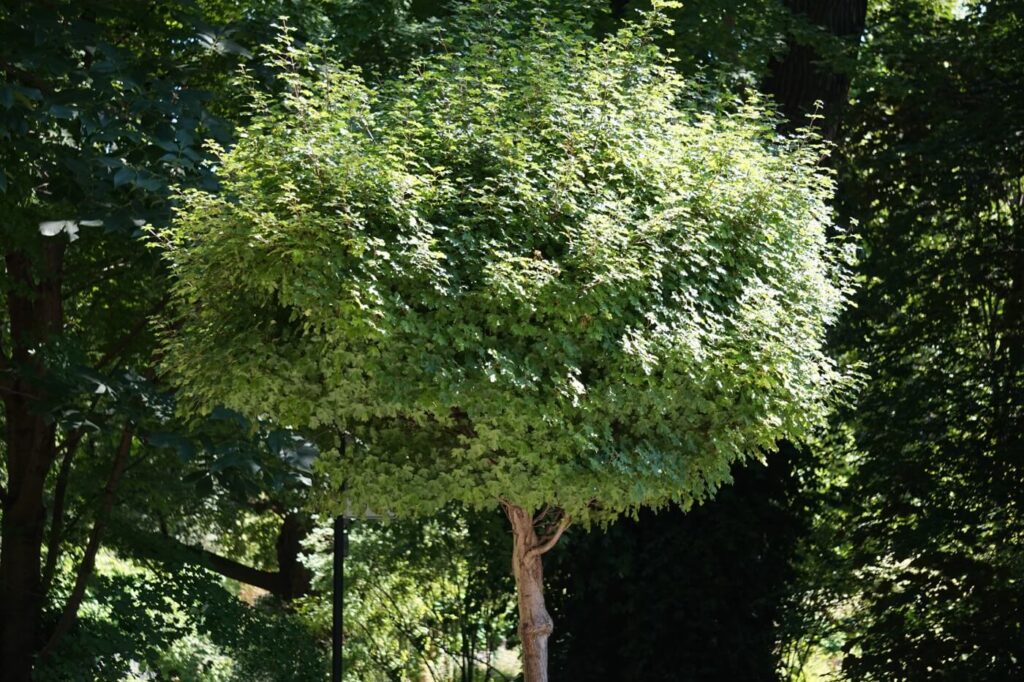
When a tree has outgrown its surroundings — blocking light, overshadowing neighbouring properties, or encroaching on buildings — crown reduction is the professional solution. Unlike topping, which damages the tree and creates long-term problems, crown reduction carefully shortens branches back to suitable growth points, maintaining the tree’s natural shape while reducing its overall height and spread.
A and J Tree Services provides expert crown reduction for all tree species across Walsall, Wolverhampton, Dudley, Cannock, Willenhall, and the wider West Midlands. Every reduction we carry out is performed to British Standard BS3998, ensuring the tree remains healthy, structurally sound, and visually attractive after the work is complete.
Is Crown Reduction the Right Choice for Your Tree?
When a tree has outgrown its surroundings — blocking light, overshadowing neighbouring properties, or encroaching on buildings — crown reduction is the professional solution. Unlike topping, which damages the tree and creates long-term problems, crown reduction carefully shortens branches back to suitable growth points, maintaining the tree’s natural shape while reducing its overall height and spread.
A and J Tree Services provides expert crown reduction for all tree species across Walsall, Wolverhampton, Dudley, Cannock, Willenhall, and the wider West Midlands. Every reduction we carry out is performed to British Standard BS3998, ensuring the tree remains healthy, structurally sound, and visually attractive after the work is complete.
Crown Reduction Explained: A Professional Guide to Managing Overgrown Trees in the West Midlands
Crown Reduction Explained: A Professional Guide to Managing Overgrown Trees in the West Midlands
Crown reduction is one of the most frequently requested and widely misunderstood tree surgery services in the UK. Many homeowners who contact a tree surgeon because their tree has “got too big” are actually asking for a crown reduction, even if they do not know the correct terminology. It is also one of the services where the difference between a qualified arborist and an unqualified operator is most starkly visible in the results. Done properly, a crown reduction maintains the natural shape and long-term health of the tree while reducing its overall size and spread. Done badly — which usually means topping, the indiscriminate cutting of branches to stubs — the result is a disfigured tree that produces weak, whip-like regrowth and is more dangerous than it was before. A and J Tree Services provides professional crown reduction across Walsall, Wolverhampton, Dudley, Cannock, Willenhall, and the wider West Midlands, and we take particular care to ensure that every crown reduction we carry out is performed to the highest arboricultural standards.
So what exactly is a crown reduction? In technical terms, it is the reduction of the overall size of a tree’s crown by shortening branches back to a suitable growth point. This means that instead of simply cutting a branch off at an arbitrary point — which is what topping does — the arborist identifies a lateral branch or growth point that is growing in an appropriate direction and cuts back to that point. The remaining lateral branch then becomes the new branch tip, and because it is already an established growing point, the tree continues to grow naturally from there rather than producing the dense clusters of weak shoots that result from topping cuts. The end result is a tree that is smaller and more compact but retains its natural shape and structural integrity.
The distinction between crown reduction and topping cannot be overstated, and it is something that every homeowner considering tree work should understand. Topping — also known as lopping, hat-racking, or heading — involves cutting branches back to stubs with no regard for growth points or branch structure. It is cheap, fast, and devastatingly harmful to the tree. Topped trees respond by producing dozens of epicormic shoots from each cut point: thin, weakly attached branches that grow rapidly and are far more likely to fail in wind than the original branches were. The tree ends up larger than before within a few years, but with a structurally weaker and more dangerous crown. Topping also exposes large wounds that are susceptible to fungal infection and decay, which can compromise the structural integrity of the entire tree over time. “I have lost count of the number of trees I have been called to assess that have been topped by a previous operator,” says Andrew Jones, owner of A and J Tree Services. “The customer thought they were getting a crown reduction but ended up with a tree that looks terrible and is actually more dangerous than it was. Proper crown reduction costs more because it takes more time and skill, but the tree stays healthy and looks good.”
Crown reduction is typically recommended in several common situations. The most frequent is when a tree has simply outgrown its surroundings — perhaps it was planted too close to the house, or it has grown larger than anticipated and is now blocking light to windows, overshadowing the garden, or encroaching on a neighbouring property. In the residential areas of Walsall, Wolverhampton, and Dudley, where Victorian and Edwardian houses often have relatively modest gardens with mature trees that were planted over a century ago, this is an extremely common scenario. A well-executed crown reduction can restore light, create clearance from the building, and bring the tree back into proportion with its surroundings without removing it entirely.
Storm damage is another situation where crown reduction may be recommended. If a tree has lost branches on one side during high winds, the resulting imbalance can make the tree more vulnerable to further wind damage. A crown reduction can be used to rebalance the crown, reducing the sail area and redistributing the weight to improve the tree’s stability. This is a more nuanced approach than simply removing the tree and is often the preferred option where the tree is otherwise healthy and structurally sound.
Crown reduction is also frequently requested to address issues of subsidence risk. In areas with clay soils — which includes much of the West Midlands — large trees can cause soil shrinkage during dry periods by extracting significant volumes of water through their root systems. This can lead to foundation movement and structural damage to nearby buildings, particularly older properties without modern foundations. Insurance companies and structural engineers often recommend crown reduction as a management strategy to reduce the tree’s water demand without removing it entirely. By reducing the canopy area, the tree’s transpiration rate is lowered, which in turn reduces the volume of water extracted from the soil and the associated risk of subsidence.
The amount that a crown can be reduced by depends on the species, the age and condition of the tree, and the reason for the reduction. As a general guideline, most arborists recommend reducing the crown by no more than thirty percent in a single operation. More aggressive reductions are possible for certain species that tolerate hard pruning, such as lime, plane, and hornbeam, but for species that respond poorly to heavy pruning — including beech, birch, and most conifers — a more conservative approach is essential. Over-reduction can stress the tree to the point where it declines and dies, which defeats the purpose of reducing rather than removing it. A qualified arborist will assess the tree and recommend an appropriate level of reduction based on the specific circumstances.
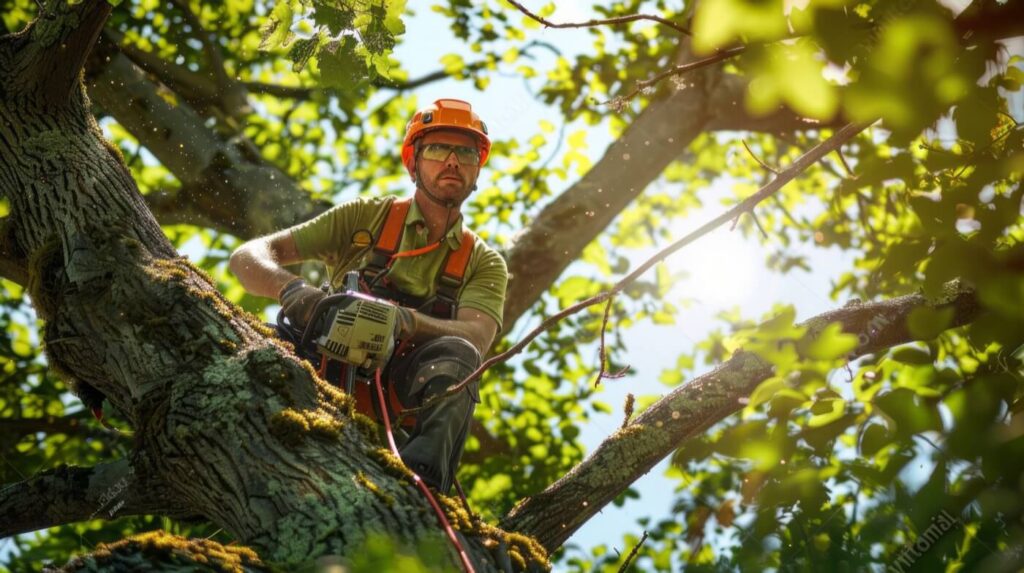
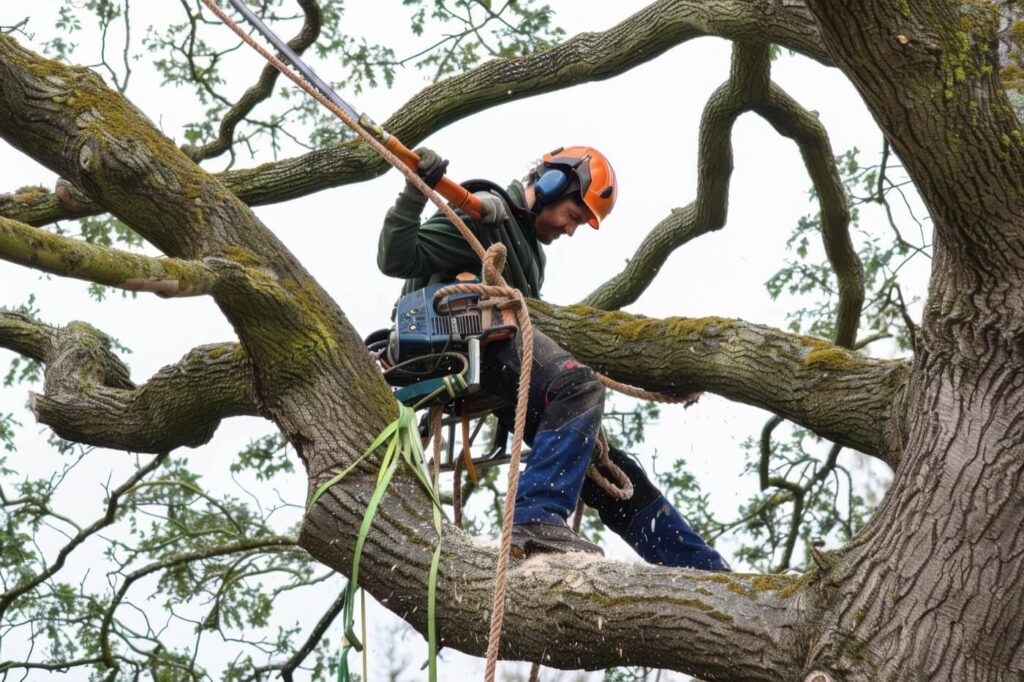
The practical process of carrying out a crown reduction involves a climbing arborist ascending the tree using ropes and a harness, then working systematically through the crown, making cuts at the specified reduction points. Each cut is made just above a suitable lateral branch or growth point, at an angle that promotes healing and minimises the risk of water pooling on the wound surface. The cut material is either lowered on ropes in controlled drops or allowed to fall into a designated drop zone below, where a ground team processes it through a woodchipper. A typical crown reduction on a medium-sized tree takes between half a day and a full day to complete, depending on the size and complexity of the job.
One important consideration that many customers are not aware of is that crown reduction work on protected trees requires prior consent from the local authority. If your tree is subject to a Tree Preservation Order, or if it is located within a conservation area, you must apply to the council before any work is carried out. In the Walsall, Wolverhampton, and Dudley council areas, applications for work to protected trees are handled by the planning department and typically take six to eight weeks to process. A and J Tree Services can advise you on whether your tree is protected and assist with the application process. We prepare detailed specifications of the proposed work as part of the application, which increases the likelihood of gaining consent. “We deal with TPO applications regularly,” says Andrew. “The councils around here are generally reasonable if the application is well-presented and the proposed work is justified. We know what they expect to see and how to describe the work in a way that makes sense to the tree officers.”
The cost of crown reduction depends on the size of the tree, the extent of the reduction, access to the site, and any complications such as proximity to buildings or power lines. Because crown reduction is a skilled, time-intensive operation carried out at height, it is not the cheapest tree surgery service — but it is significantly less expensive than tree removal and preserves the tree for future generations. We provide free, no-obligation quotations for all crown reduction work, and we are always transparent about what the job involves and why.
After a crown reduction has been carried out, the tree will look noticeably smaller and tidier, but some customers are surprised by the amount of visible cut points and the initial “thinness” of the canopy. This is entirely normal and temporary. Over the following growing season, the retained lateral branches will extend and new foliage will fill in the gaps, and within one to two years the crown will have developed a full, natural appearance at its new, smaller size. Subsequent maintenance reductions can then be carried out on a cyclical basis — typically every three to five years — to keep the tree at the desired size.
At A and J Tree Services, all of our crown reduction work is carried out to British Standard BS3998, which specifies that reduction cuts should be made to a growth point that is at least one-third the diameter of the branch being removed. This is the industry benchmark for quality crown reduction work and ensures that the tree responds well to the pruning and maintains its structural integrity. We never top trees, we never make flush cuts that damage the branch collar, and we never remove more than is necessary to achieve the agreed outcome.
For property owners across Walsall, Wolverhampton, Dudley, Cannock, Willenhall, and the West Midlands who have a tree that has outgrown its space, is blocking light, or is causing concern about subsidence or storm vulnerability, crown reduction is a professional, sustainable solution that preserves your tree while managing its size. Contact A and J Tree Services on 07930 095205 for a free consultation and quotation. “A good crown reduction should look like the tree was always that size,” says Andrew. “That is what we aim for on every job.”
Is Crown Reduction the Right Choice for Your Tree?
Crown reduction is appropriate when the tree is fundamentally healthy but has grown too large for its location. It is commonly used to restore light to gardens and windows, create clearance from buildings, reduce wind loading on exposed trees, and manage subsidence risk in areas with clay soils. We will always assess whether reduction is the best option, or whether crown thinning, pollarding, or in some cases removal would be more appropriate.
Crown Reduction vs Topping - Why It Matters
Topping (also called lopping) is the indiscriminate cutting of branches to stubs. It is cheap, fast, and severely damaging to the tree. Topped trees respond with dense clusters of weakly-attached shoots that are far more dangerous than the original branches. Crown reduction, by contrast, cuts back to natural growth points, preserving the tree’s structure and promoting healthy regrowth. We never top trees.
Crown Reduction FAQs
How much can you reduce a crown by?
We typically recommend reducing by no more than 30% in a single operation. The exact amount depends on the species, age, and condition of the tree. Some species tolerate harder pruning than others.
Will crown reduction damage my tree?
Not when done properly. Professional crown reduction to BS3998 standards maintains the tree’s health and structure. Topping, on the other hand, causes significant long-term damage.
Do I need council permission?
If your tree has a Tree Preservation Order or is in a conservation area, you need consent from the local council before any work. We can check this for you and assist with the application.
How often does crown reduction need repeating?
Most trees need re-reducing every three to five years, depending on the species and growth rate. We can advise on a suitable maintenance cycle for your trees.
Our Services
We're here to help! Call Us Today!