

Tree Services for Schools, Academies & Colleges
Walsall & West Midlands
Keeping pupils, staff, and visitors safe with professional tree management.

Can’t Arrange a Site Visit?
We offer quote-by-email for customers who cannot arrange a traditional visit. Send us a photo and a brief description of the work you need, and we will provide an indicative price. Email office@aandjtreeservices.co.uk or call 01922 404537.
Tree Services for Schools, Academies & Colleges
Schools have a heightened duty of care when it comes to tree management. Children are naturally drawn to trees — climbing them, playing beneath them, and gathering around them at break times. This means that dead branches, unstable trees, protruding roots, and overhanging limbs present a far greater risk on school grounds than they might in other settings.
A and J Tree Services provides specialist tree care to primary and secondary schools, academies, academy trusts, colleges, nurseries, and universities across Walsall, Wolverhampton, Dudley, Cannock, and the wider West Midlands. We understand the unique requirements of educational settings — from safeguarding considerations and term-time scheduling to Ofsted compliance and local authority reporting.
Why Schools Need Professional Tree Management
Trees on school grounds bring enormous benefits – they provide shade, support biodiversity, and create natural learning environments. But without proper management, they can also create serious risks:
- Dead or hanging branches above playgrounds, playing fields, outdoor classrooms, and pedestrian routes – the most common and most dangerous tree hazard on school sites
- Unstable trees near buildings, fencing, or car parks that could fail in storms — particularly older trees that have not been inspected for years
- Protruding roots creating trip hazards on paths, playgrounds, and playing fields – a frequent cause of injury claims against schools
- Trees blocking natural light to classrooms and indoor spaces – affecting the learning environment and increasing energy costs
- Allergy-producing trees near buildings – species such as birch and plane can aggravate hay fever and asthma in pupils and staff
- Trees interfering with sports facilities, fencing, and outdoor equipment – roots damaging artificial surfaces, branches encroaching onto pitches
- Leaf litter blocking drains and creating slippery surfaces on paths and playgrounds – particularly hazardous during autumn term
Tree Management for Schools, Academies and Nurseries: Keeping Pupils Safe and Grounds Well Maintained
Tree Management for Schools, Academies and Nurseries: Keeping Pupils Safe and Grounds Well Maintained
Trees are an important part of any school environment. They provide shade for playgrounds, shelter from wind and rain, habitats for wildlife that support the science curriculum, and a connection to the natural world that contributes to children’s wellbeing and development. But trees on school grounds also carry responsibilities that headteachers, site managers, and governing bodies cannot afford to overlook. A tree that drops a heavy branch onto a playground during break time, a root system that trips a child running across a playing field, or a dead tree that falls in a storm — these are scenarios that every school must take steps to prevent. A and J Tree Services provides specialist tree management for schools, academies, nurseries, and colleges across Walsall, Wolverhampton, Dudley, Cannock, and the wider West Midlands, helping educational establishments meet their duty of care while preserving the trees that make their grounds attractive and educationally valuable.
Safeguarding and Duty of Care
Schools have an enhanced duty of care because their primary users are children, who are less likely to recognise and avoid hazards than adults. Under the Occupiers’ Liability Act 1957 and the Health and Safety at Work Act 1974, schools must take reasonable steps to ensure that their premises are safe for pupils, staff, parents, and visitors. Ofsted inspectors assess the safety of school environments as part of their inspection framework, and a school that cannot demonstrate that it manages known hazards — including trees — may face criticism in its inspection report. The foundation of responsible tree management is a professional tree survey, carried out by a qualified arborist, that identifies every significant tree on the school grounds, assesses its condition, and provides recommendations. A and J Tree Services carries out tree surveys to BS5837 standard, providing clear written reports that headteachers and governing bodies can use to demonstrate their compliance with health and safety requirements.
Playground and Sports Field Safety
The areas where children play and exercise deserve particular attention. Trees adjacent to playgrounds, sports pitches, and outdoor learning areas should be regularly inspected for deadwood, weak branch attachments, cavities, and signs of decay. Crown lifting — raising the lowest branches to a safe height — ensures that children cannot climb into dangerous positions and that branches do not interfere with play equipment or sports activities. Deadwood removal eliminates the risk of dead branches falling without warning. Where trees are in poor condition and cannot be made safe through pruning, we will recommend removal and can advise on suitable replacement planting that provides the same benefits without the risk. “Schools are one of the areas where we are most cautious,” says Andrew Jones, owner of A and J Tree Services. “When you are dealing with children’s safety, there is no room for cutting corners. We inspect school trees thoroughly and we always err on the side of caution in our recommendations.”
Scheduling Around the School Calendar
One of the practical challenges of school tree work is scheduling. Noisy chainsaw work during lessons is disruptive, and working near children during break times and lunchtimes raises obvious safety concerns. We work closely with school site managers to schedule tree work during school holidays wherever possible, or during hours when the affected areas are not in use. For urgent safety work that cannot wait for the holidays, we can carry out operations before or after school hours, or we can establish exclusion zones around the work area during the school day. We understand the operational constraints that schools work within, and we are flexible in our scheduling to minimise disruption to teaching and learning.
Budget Considerations for Schools
We understand that schools operate within tight budgets, and we are transparent about costs from the outset. Our free initial site assessment allows us to identify the work that is needed and provide a clear quotation before any commitment is made. We can also help schools prioritise work — separating urgent safety items from desirable but less critical maintenance — so that limited budgets are directed where they are needed most. For schools that want to spread the cost, we offer annual maintenance agreements that cover all routine tree work for a fixed annual fee, making budgeting straightforward and ensuring that tree management does not slip down the priority list when budgets are tight.
The Educational Value of Trees
Trees on school grounds are not just a maintenance liability — they are an educational resource. Mature trees support biodiversity, providing habitats for birds, insects, and fungi that can be studied as part of the science curriculum. Seasonal changes in trees illustrate the natural cycles that children learn about in biology and geography. Woodland areas and individual specimen trees can become outdoor classrooms. When we work on school trees, we are always mindful of their educational value and we will discuss options for retaining and managing trees rather than simply removing them. Where removal is necessary, we actively encourage replacement planting and can advise on species that are appropriate for school environments — native species that support wildlife, species that are non-toxic and safe around children, and species that provide seasonal interest throughout the year.
Tree Surveys and Risk Assessment Documentation
For schools, documentation is particularly important. Governing bodies have a corporate responsibility for health and safety, and they need evidence that risks are being managed. Our tree survey reports provide detailed, tree-by-tree assessments with clear photographs, condition ratings, and prioritised recommendations. These reports give governors and headteachers the evidence they need to demonstrate that they are meeting their duty of care, and they provide a framework for ongoing management. We recommend that school trees are formally surveyed every two to three years, with interim inspections after severe weather events, and we can set up a schedule of regular visits to ensure that your tree management programme stays on track.
Common Tree Issues on School Grounds
School grounds across the West Midlands commonly feature mature trees that were planted when the school was built — often fifty, sixty, or even a hundred years ago. These trees may have been well-suited to the site when they were small, but decades of growth can create problems: roots that lift playground surfaces, canopies that block light to classrooms, branches that overhang neighbouring properties, and trunks with cavities or decay that compromise structural integrity. Ash dieback is affecting ash trees on school grounds across the region, and we are increasingly called upon to assess and manage ash trees that are showing signs of decline. Horse chestnuts — a favourite on school grounds — are commonly affected by bleeding canker and leaf miner, both of which reduce the tree’s vigour and appearance.
Protecting Your School Community
A and J Tree Services has extensive experience working with schools across the West Midlands, from small village primary schools to large secondary academies. All our arborists are NPTC qualified, DBS checked, and experienced in working in school environments. All work is carried out to British Standard BS3998, and we carry full public liability insurance. Call us on 07930 095205 for a free initial assessment of your school trees. “Every school should have its trees surveyed at least every three years,” says Andrew. “It is a small investment that protects pupils, protects staff, and protects the governing body.”
Our Services for Schools
Tree Risk Assessments
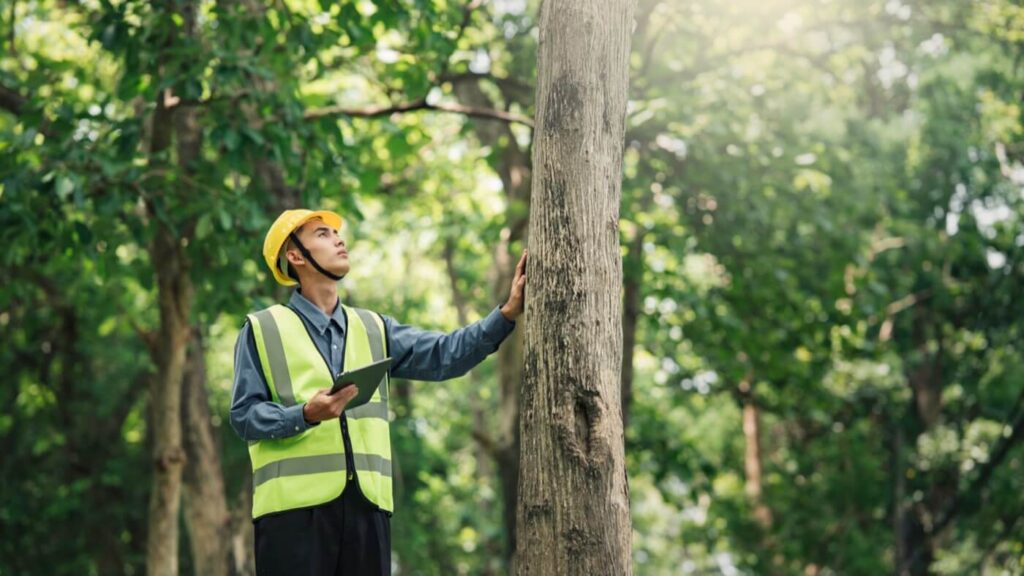
Formal tree risk assessments are essential for schools. We carry out thorough inspections of every tree on your site, identify hazards, categorise risk levels, and provide a clear written report with prioritised recommendations. These reports satisfy local authority requirements, Ofsted inspections, and your school’s duty of care obligations.
Deadwooding & Playground Safety
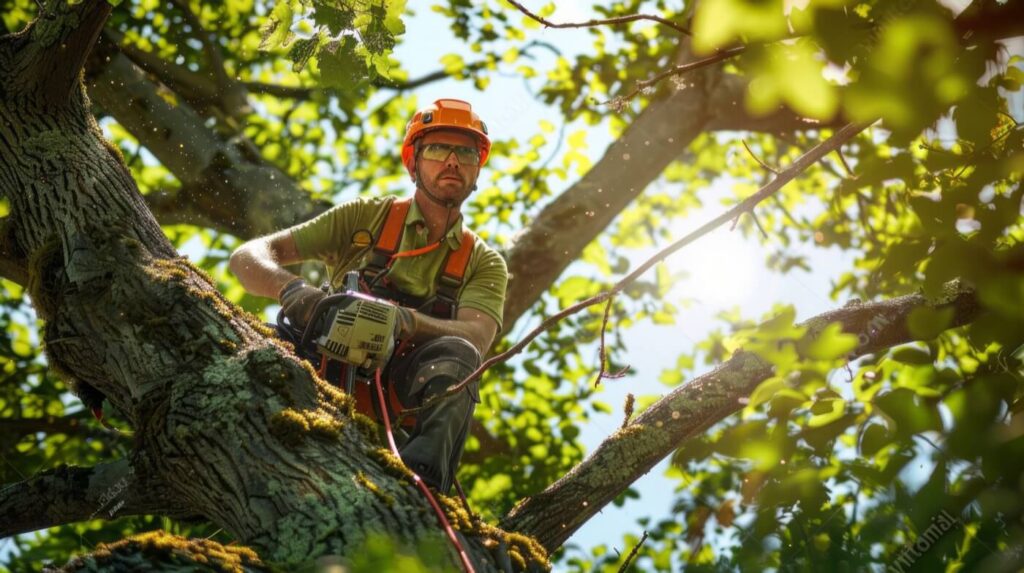
Removal of dead, dying, and weakly attached branches from trees near playgrounds, paths, and gathering areas. This is often the single most important tree safety measure a school can take, and we recommend it as part of every annual maintenance visit.
Crown Lifting & Crown Reduction
Raising the canopy to provide safe clearance above paths, play areas, and sports pitches. Crown reduction for trees that have outgrown their position near buildings. We maintain the natural shape and health of each tree while ensuring it does not create hazards or obstruct light.
Tree Removal
Safe removal of dead, dangerous, or diseased trees. Sectional dismantling for trees close to buildings, fencing, and play equipment. We check for Tree Preservation Orders and handle council applications where needed.
Stump Grinding
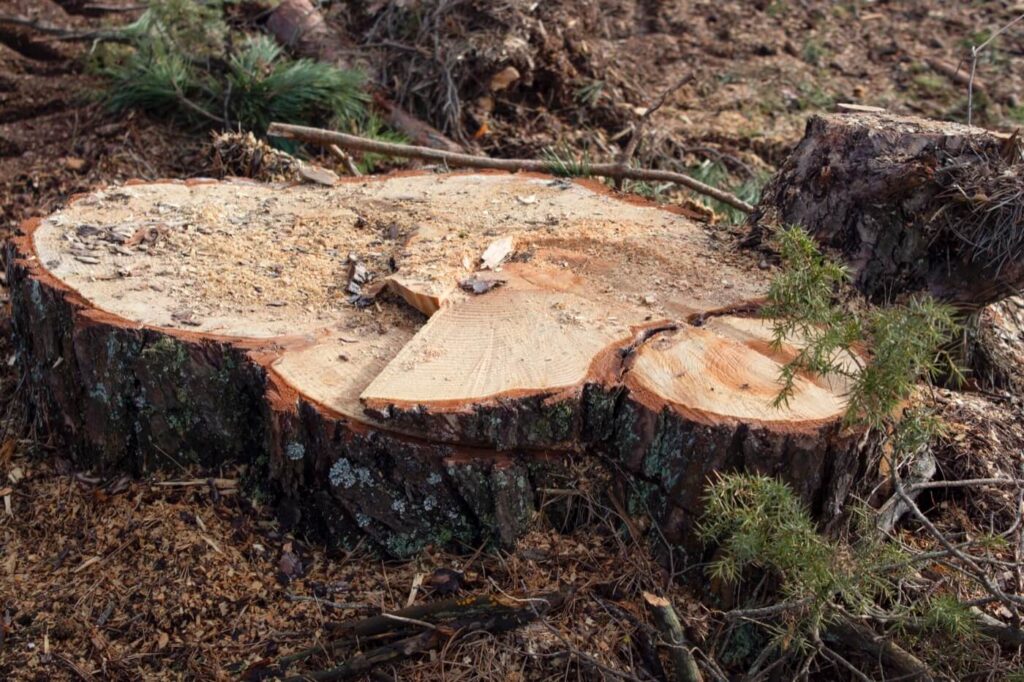
Removal of trip-hazard stumps from playgrounds, paths, and playing fields. Stumps are ground below ground level and the area can be levelled for re-turfing or resurfacing.
Planned Maintenance Programmes
Annual or termly tree maintenance contracts that keep your grounds safe and compliant year-round. Scheduled during school holidays or outside pupil hours to minimise disruption. We provide a written report after each visit for your records.
Your School’s Duty of Care
Under the Occupiers’ Liability Act and Health and Safety at Work Act, schools are responsible for ensuring that trees on their grounds do not present a danger to pupils, staff, parents, or visitors. The National Tree Safety Group (NTSG) guidance recommends that trees in high-use areas such as playgrounds and car parks should be inspected regularly by a competent person.
Failure to manage trees can result in injury, compensation claims, increased insurance premiums, and reputational damage. A professional tree risk assessment and a planned maintenance programme are the most effective way to demonstrate that your school is meeting its legal obligations.
School Tree Services FAQs
Can you work during school holidays?
Yes. Most of our school work is scheduled during half-terms and summer holidays. Where urgent work is needed during term time, we can work outside school hours and cordon off the work area to maintain pupil safety.
Do you work with academy trusts?
We work with individual schools, multi-academy trusts, local authorities, and private schools. We can provide a single point of contact for multiple sites across the West Midlands and offer volume-based pricing for trusts managing several schools.
What does a tree risk assessment include?
A full visual inspection of every tree on your site, categorised by risk level. You receive a written report with maps, individual tree assessments, photographs of significant defects, and prioritised recommendations for remedial work. The report is suitable for Ofsted, governors, and your insurer.
How often should school trees be inspected?
The NTSG recommends inspections at least once a year for trees in high-use areas. We also recommend an additional check after major storms. A planned annual inspection programme is the most cost-effective approach.
Arrange a School Tree Survey
Protect your pupils and staff with a professional tree risk assessment. We provide free initial consultations for schools and offer competitive rates for ongoing maintenance contracts.
Our Services


We're here to help! Call Us Today!